Handel’s Orlando is not the easiest sell. The plot is gloriously convoluted, the action often stops dead while somebody sings about their feelings for ten minutes, and it sits somewhere between pastoral romance, psychological drama and outright fantasy.
Yet Longborough Festival Opera’s new production, and its foray into Handel, makes a remarkably strong case for it.
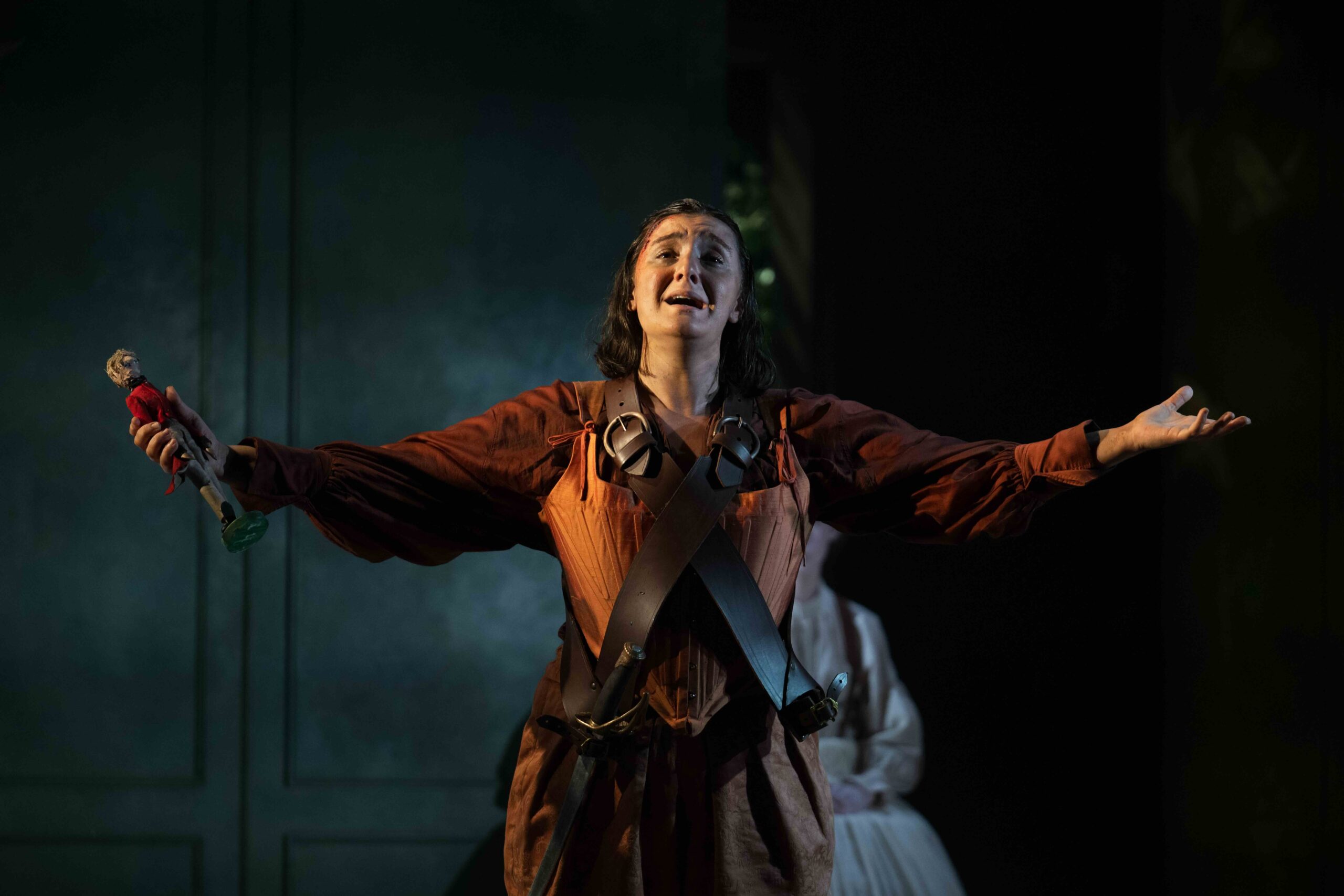
Much of the attention focusses on the gripping vocal performance from Beth Taylor in the title role, and rightly so. Orlando was one of the signature roles of Marilyn Horne, whose legendary chest register became one of the wonders of the operatic world. Horne was so celebrated for the thrillingly deep, rich lower notes that became her trademark that she once joked she should release an album called Chestnuts for Chest Nuts.
Taylor could probably do the same.
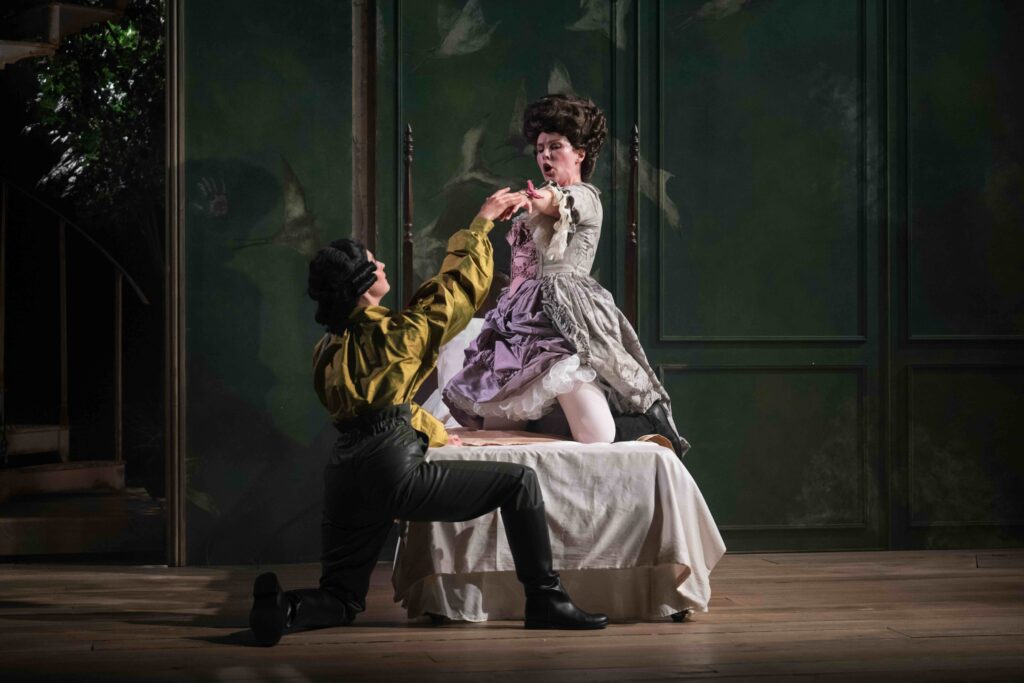
Katie Bray and Anna Devin.
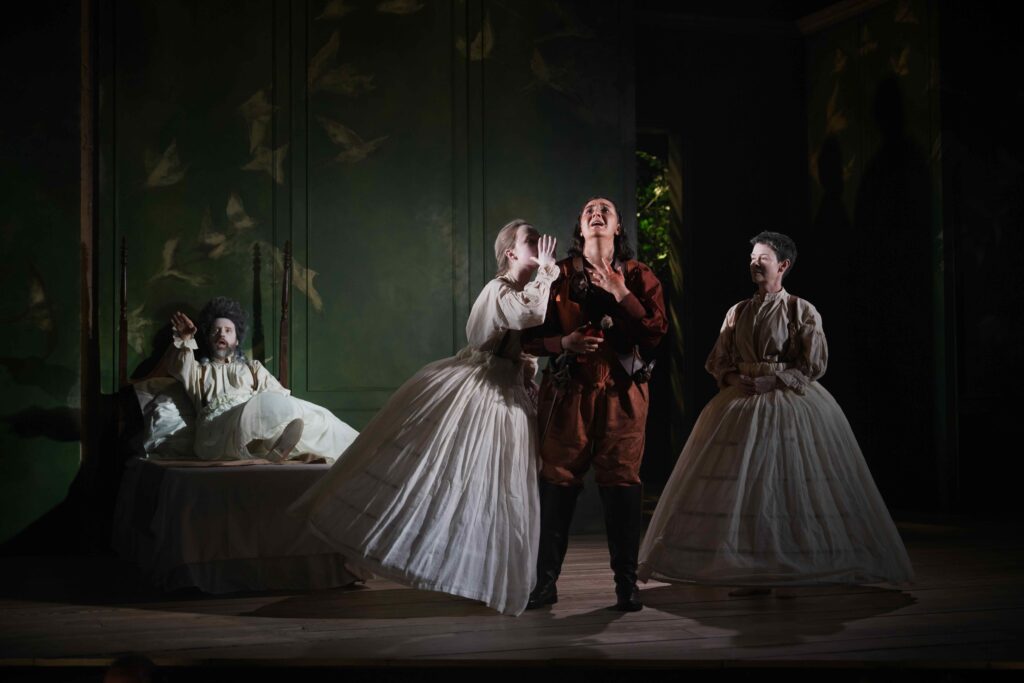
Andrew Foster-Williams, Freya Storie, Beth Taylor, Anna Tolputt.
The Glasgow-born mezzo, who seems destined for bigger stages in the near future, possesses a lower register of startling power. When Orlando’s jealousy and rage erupt, the sound is almost visceral. But what impresses most is the sheer range of colours she brings to the role. One moment she is swaggering warrior, the next vulnerable lover, then a man slowly losing his grip on reality. Vocally and dramatically, it is a performance of rare intensity.
The remarkable thing, though, is that this is not a one-person show.
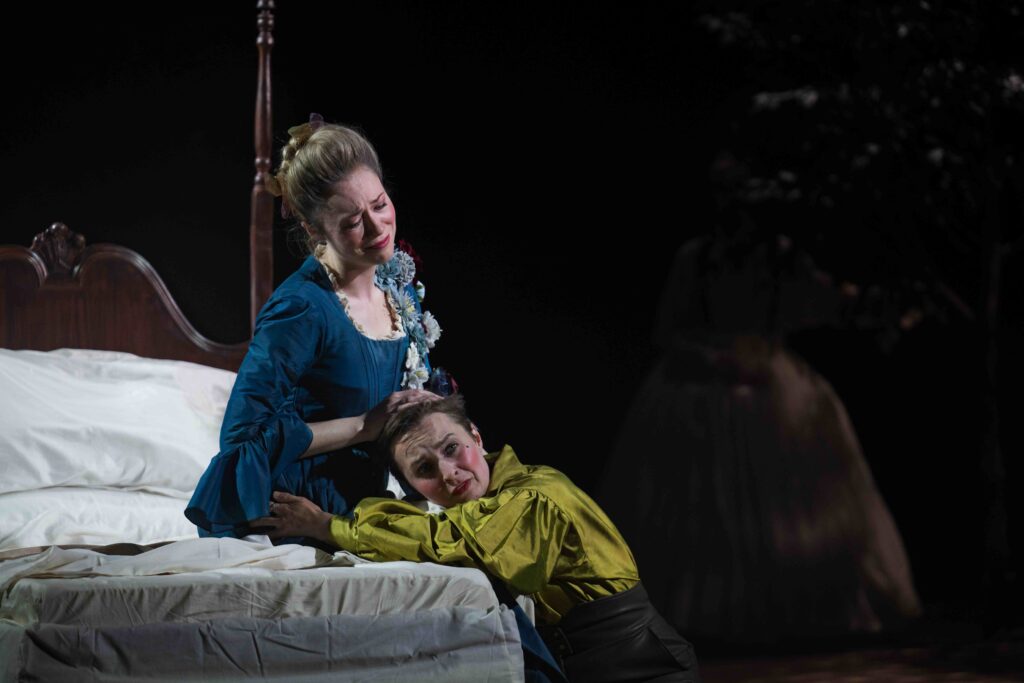
Kelli-Ann Masterson and Katie Bray Matthew.
Longborough’s intimate theatre can be wonderfully exposing. There is nowhere to hide. Every vocal line matters. Every expression registers. Any weakness becomes immediately apparent. Yet the achievement of this cast is that all five principal singers rise magnificently to the challenge.
Anna Devin’s Angelica has real backbone. Too often she can seem little more than the object of everybody else’s desires, but here she emerges as a woman making difficult choices and standing by them. Katie Bray’s Medoro starts quietly and grows steadily throughout the evening, revealing increasing confidence and emotional depth. Kelli-Ann Masterson’s Dorinda is a delight, bringing warmth, humour and genuine pathos to a character whose romantic disappointments could easily become repetitive. Andrew Foster-Williams’s Zoroastro combines authority with just the right hint of mischief, steering events from the sidelines without ever becoming detached from them.
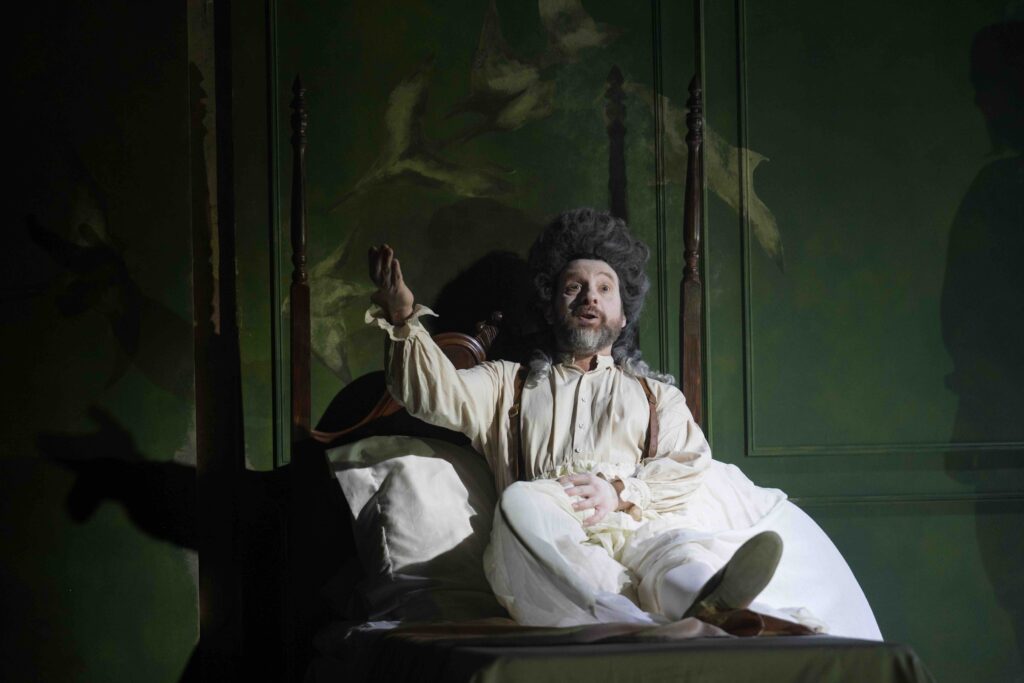
Andrew Foster-Williams
Sinéad O’Neill’s production is intriguing. There is no frantic stage business that directors often seem to feel obliged to add during da capo arias. Together with designer Anisha Fields and movement director Michael Ashcroft, she creates a world that is clearly artificial yet emotionally convincing. Particularly effective are the three ghostly silent figures who accompany the action. They glide through the drama like manifestations of fate or subconscious impulses, neither entirely within nor outside the story. As Orlando’s mind begins to fracture, they increasingly seem to guide and silently direct the actions of the mortal players, nudging them towards decisions they cannot avoid.
It is a simple idea but an effective one.
The real challenge with Orlando is that it can feel less like a drama than a sequence of brilliantly written arias. That problem never entirely disappears because it is built into the work itself. What this cast achieves is something rather impressive: they make you stop noticing it. Each aria emerges naturally from the drama and leads back into it. The emotional thread remains unbroken.
Christopher Moulds draws stylish and responsive playing from the Academy of Ancient Music, whose contribution is crucial. Handel’s score is full of invention and character, and the orchestra relishes both.
The evening’s most memorable moment comes in Orlando’s great third-act breakdown. Having lost everything, he longs for death. Accompanied by the sparsest orchestral textures, Taylor produces singing of extraordinary delicacy and vulnerability. The voice that earlier filled the theatre with blazing anger is reduced to an almost whispered thread of sound. In Longborough’s small auditorium the effect is electrifying. You could feel the audience holding its breath.
Handel often struggles in large opera houses, where these intimate emotional dramas can seem oddly static. Longborough turns that potential weakness into a strength. Every feeling registers. Every thought matters.
By the end, what remains is not simply admiration for Beth Taylor’s outstanding performance, impressive though it is, but for five singers working together with remarkable consistency and conviction. They turn what can sometimes feel like a sequence of vocal essays into a genuinely absorbing piece of music theatre.
Strange? Certainly. But also moving, intelligent and musically superb.
Image: Matthew Williams-Ellis
Until June 7
