
Tosca, Welsh National Opera
Tosca with a reduced orchestra and bought in 2018 production from Opera North may not sound like the height of excitement for Welsh National Opera’s autumn season.
Yet, the Saturday afternoon performance at Wales Millennium Centre was a glorious entertainment that had the usually more restrained opera audiences literally cheering at the curtain calls.
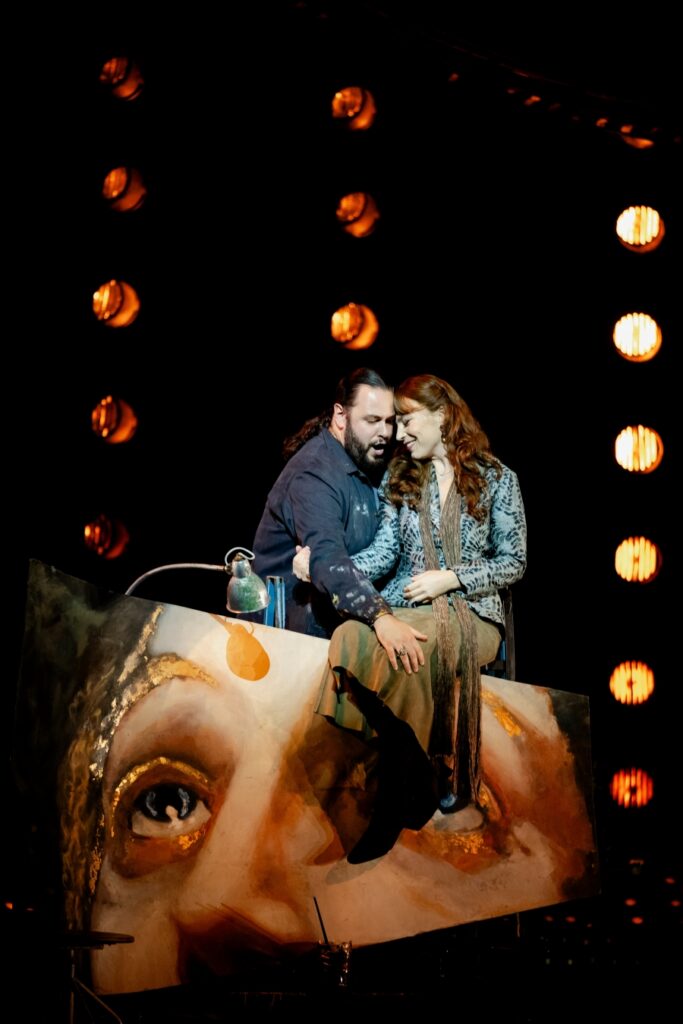
Andrés Presno and Natalya Romaniw
It was unlikely to have been because of the production itself. Edward Dick’s Leeds production has two main ideas; that the drama can be updated to a sort of contemporary autocratic regime, and that the set from Tom Scutt should be dominated by an admittedly beautiful Pantheon-like dome. The former idea means we had henchmen with machine guns, talking into mobile phones, Tosca watching Cavaradossi being tortured on Scarpia’s laptop, and the people who pour in for the Act One De Teum being a motley crew of flashily dressed fashionistas waving golden flags.
It is through the cupola of the dome that the political prisoner Angelotti descended on a rope as the opera opened and through which Tosca threw herself to her death in the final scene. Somehow and for some reason it has found itself moved to Scarpia’s office/torture chamber and then to the back of the battlements of Castel San Angelo. Similarly the banks of candles from the church also remained throughout the three acts, with a choirboy lighting them for some reason.
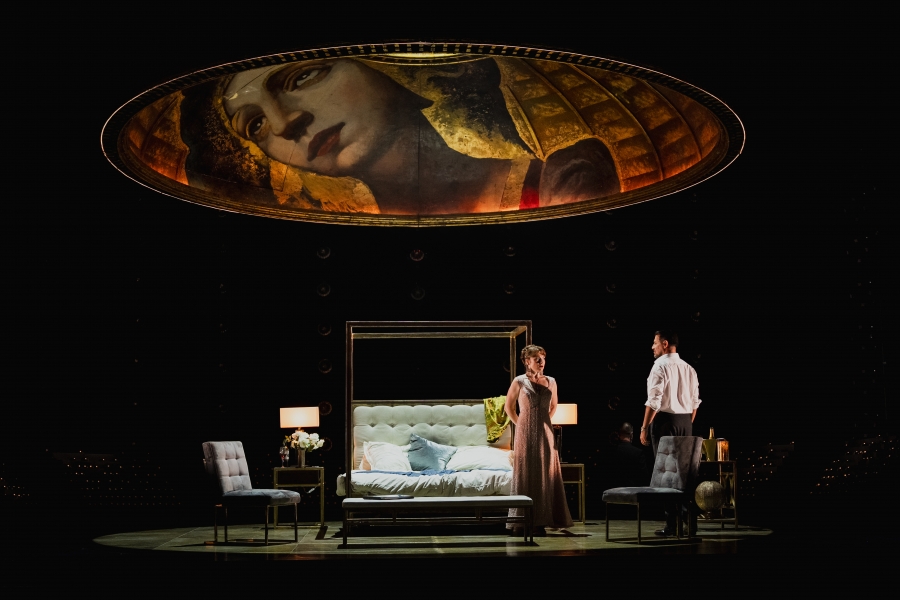
Natalya Romaniw and Dario Solari
However, it was undoubtedly the singing, orchestral playing and the acting that was electrifying, deeply moving and that I believe delighted the audience so much. The performance revolved around Natalya Romaniw’s finely crafted and flawlessly performed Tosca.

Natalya Romaniw
Having followed the career of Swansea-born soprano Natalya Romaniw it was heartwarming to see and hear her so appreciated on her home turf. She delighted in Il trittico last year, but it is as Tosca that she is making her international mark and with which she will be at Glyndebourne in 2026. Her singing grows in beauty and richness, with every word and note deserving to be relished. What is also captivating is how she lived the character and, in this direction, developed as the horrors of her predicament become more and more unbearable. She ranges from, yes, jealous but sweet and innocent, to a bile-spitting killer when Scarpia has pushed her too far, and then joins Cavaradossi as a fellow revolutionary before that grim finale. My eyesight is not good enough to make out the detail, but in that last scene Tosca pulls back her sleeve to reveal she has the same presumably radical tattoo on her forearm as Cavaradossi. They hold hands and both raise a fisted salute. Their celebration was of course short lived.
The Cavaradossi, Andrés Presno, grew as the afternoon developed, with singing that was bold and bright, culminating in a heart-wrenching “E lucevan le stelle”. Dramatically, he made the transformation from idealistic artist of Act One to the tortured, despairing wreck of Act Three. However, the use of the laptop and the staging for Act Two did impact the effectiveness of Puccini’s off-stage blood curdling torture. That Act Two was dominated again by that cupola but also by a clunky four poster bed which at one stage seemed like a wrestling ring contest between Scarpia and Tosca and on which he finally gets his comeuppance.
The characterisation of Scarpia, sung by Dario Solari, is fascinating. He seems to shake with lust but also with some awareness of how this is controlling him. He puts his head in his hands, and at the end of Act One seemed in some sort of religious-sexual ecstasy. Chilling. In the second act he filmed Tosca on his mobile phone as she is wracked in emotional agony singing “Vissi d’arte”. You can imagine him playing it back later. His singing is more beautiful than the menacing Scarpia we have come to expect and when Tosca seems to almost fall for his feigned charm (embracing his legs) towards the end of Act One you could see why.

Natalya Romaniw and Andrés Presno
That second act reveals the dramatic finesse of Romaniw. The characterisation is largely provided by the direction, but she was here both the devout, pious woman but also always the glamorous actress, ready to show little gestures of her stage craft. She is also able to move around the stage very nimbly, climbing on to the scaffolding that holds the painting of the Magdalena in Act One, Scarpia’s bed in Act Two and then falling backwards from the battlements.
The production also gave smaller roles space to shine, whether it was the rather weasel-like Spoletta from Alun Rhys-Jenkins or Ross Fettes’ Sacristan who balanced piety with earthly corruption.
While Max Fokkens’ Shepherd Boy was a small role, he sang it beautifully and the image of the boy sitting in the opening of the cupola as Act Three opens was exquisite. It is also all the more poignant as it is from where Tosca will fall to her death.
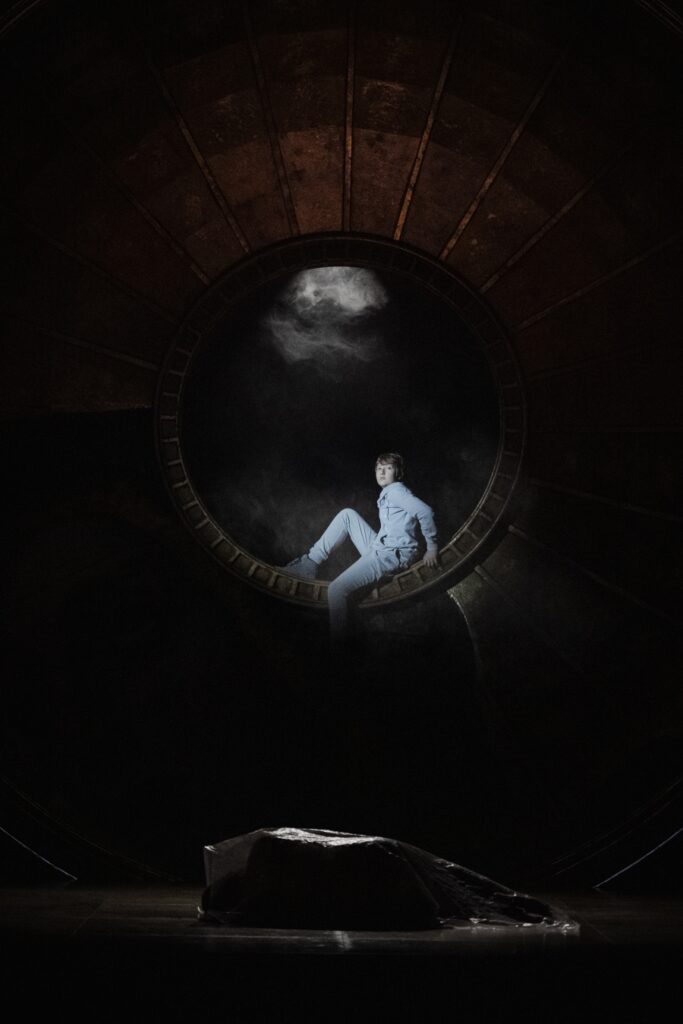
Max Fokkens
How conductor Gergerly Madaras and the embattled musicians of the WNO Orchestra produced such a ravishing afternoon of music is a small miracle or, more accurately, testament to their art and craft.
The audience departed Wales Millennium Centre uplifted after singing, acting and musicianship that makes the Welsh National Opera so important.
Ultimately this was a performance that belonged to Romaniw.
Images by Dafydd Owen
Now touring until October 18
https://wno.org.uk/whats-on/tosca
Also this season:
Candide
