***
It’s always a bold undertaking to bring a centuries-old tale steeped in history and legend to the operatic stage, and Nishat Khan’s Taj Mahal at Grange Park Opera succeeds spectacularly in one respect: the production is a visual and musical feast of breathtaking imagination. Yet, despite the exquisite craftsmanship and moments of lyrical beauty, the opera’s narrative structure often feels frustratingly disjointed, undercutting the emotional power that such a legendary love story ought to summon.
The Mughal emperor Shah Jahan and Mumtaz Mahal’s marriage is famously the inspiration behind the Taj Mahal, the intricate white marble mausoleum built for his wife on her death in1631 during the birth of the couple’s fourteenth child. A black Taj was planned for the other side of the Yamuna River but Shah Jahan’s deposition by his son Aurangzeb put an end to that. He spent his last days in prison in Agra apparently with a view of the Taj. Nowadays tourists pay a small fortune for the vista from their swanky hotels.
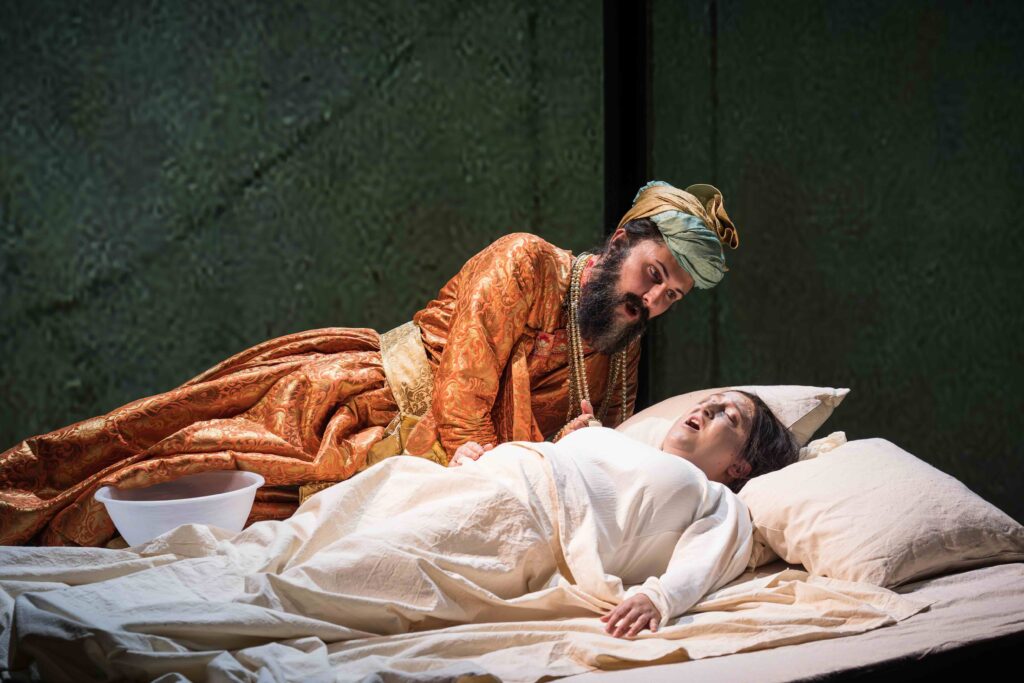
Caspar Singh and Julia Sitkovetsky
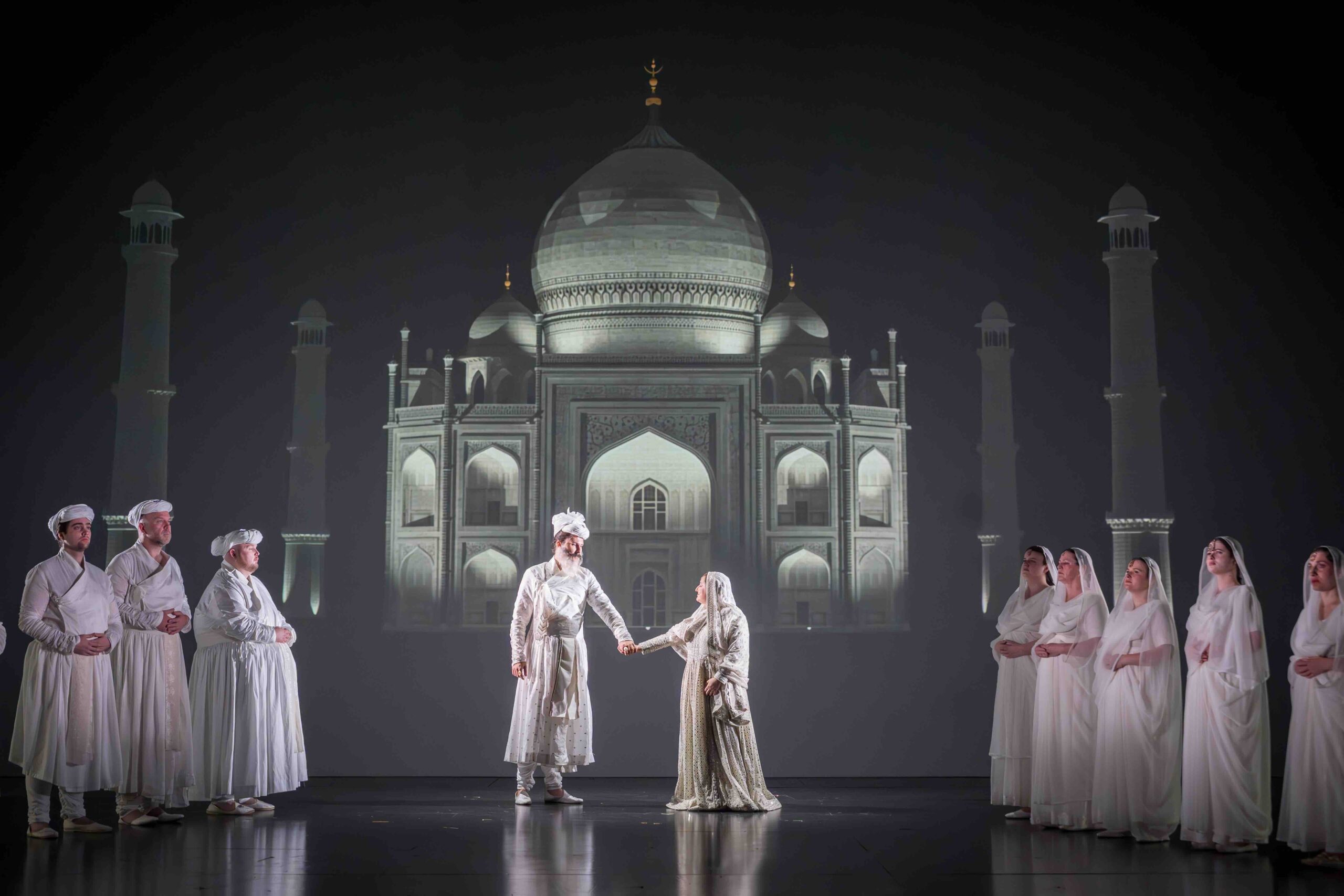
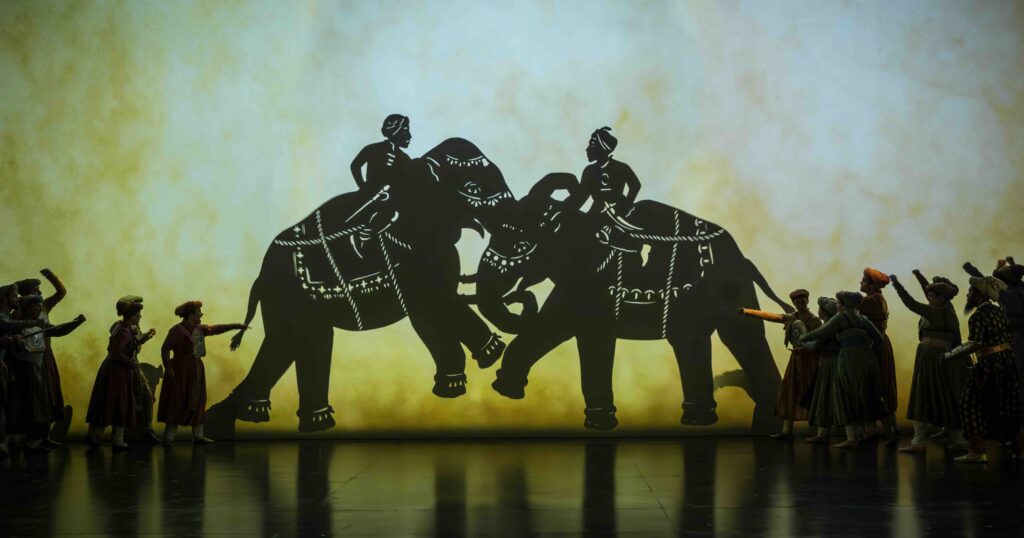
Visually, this production is a triumph. Designer Yannis Thavoris delivers sumptuous costumes that echo Mughal artistry, while Hayley Egan’s video projections redefine what can be achieved in an opera house. Giant cloth screens become living canvases, showcasing exquisite trompe-l’œil palace interiors, intricate Islamic floral motifs, and a hauntingly beautiful moonlit Taj Mahal that lingers in the mind long after the curtain falls. The stylised battle scenes orchestrated by director Stephen Medcalf and movement director Seeta Patel are a marvel—archers and elephants, both projected and live, merge into a hypnotic tableau that marries myth with reality. This really was a fabulous evening of theatricality.
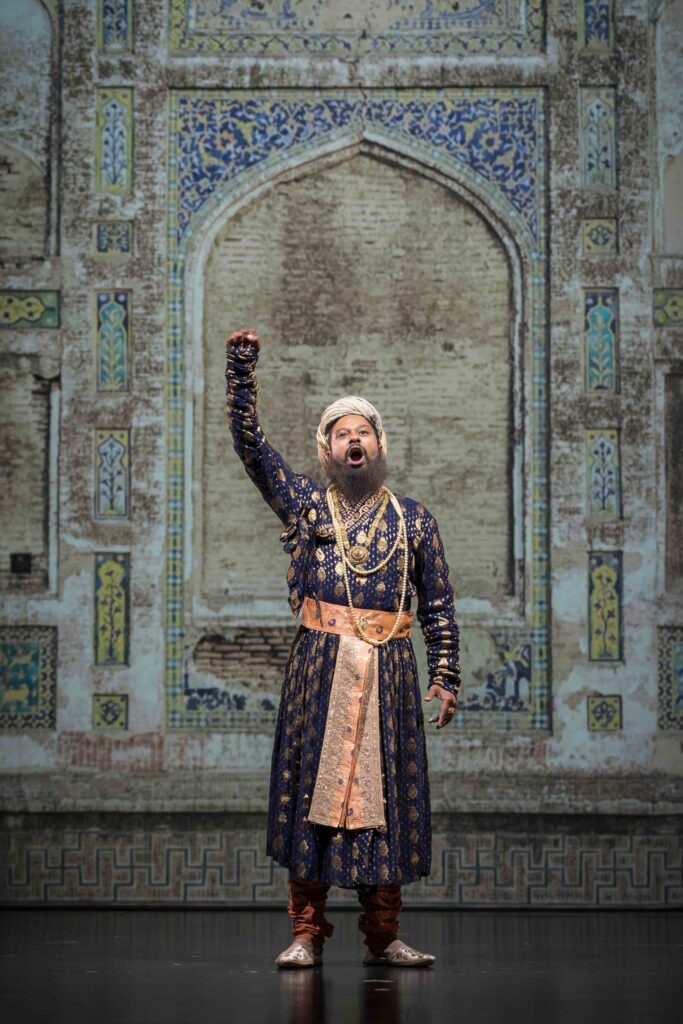
Ross Ramgobin
Musically, Nishat Khan—an extraordinary sitar virtuoso and the opera’s composer and narrator—displays a remarkable command of the Western classical idiom, with choral and orchestral writing of rare elegance. His weaving of Indian melodic scales into the score is seamless, creating a unique sound world where in the main East and West converse fluently. Moments such as the off-stage choral introduction in Act 2 and the intimate duet between Shah Jahan and Mumtaz offer genuine lyrical beauty and emotional resonance.
However, the storytelling is not totally coherent. The libretto by Kit Hesketh-Harvey (some of the rhymes were a little too laboured) attempts an episodic approach, jumping back and forth in time to cover key moments in Shah Jahan’s life and the brutal Mughal succession struggles. While this non-linear narrative occasionally intrigues, more often it confuses, diluting dramatic momentum and making it difficult to fully engage with the characters’ journeys. The insertion of anachronistic messages—such as a modern gender equality sentiment voiced by Shah Jahan—feels jarring and detracts from the historical atmosphere. However, other snippets from the narrator, such as comments on parallels with the contemporaneous Tudor history and the “Brits” whose monarchs replaced the Moghuls, worked well. We could have had the late Princess of Wales famous photo sitting in front of the Taj as the most modern expression of doomed love but that might have been a bit too much for the sentimental love story side of the opera.
Vocally, the cast generally impresses, with Caspar Singh’s lyrical tenor and Ross Ramgobin’s commanding baritone standing out. This was a meatier role than Sharpless in Butterfly also in this Grange Park season. Julia Sitkovetsky as Mumtaz is emotionally convincing but had the most vocally challenging role.
The most tantalizing missed opportunity is the restrained use of Khan’s sitar playing. Given Khan’s status as one of the world’s finest sitarists, it is disappointing that his instrument features so sparingly. His few moments of full virtuosity are electrifying, but the opera would have benefited greatly from integrating the sitar more extensively, deepening the cultural and emotional texture of the score. However, he shows his ability to write in the classical genre, as well as delighting with his charm and humour, holding the audience in his hand as a consummate storyteller.
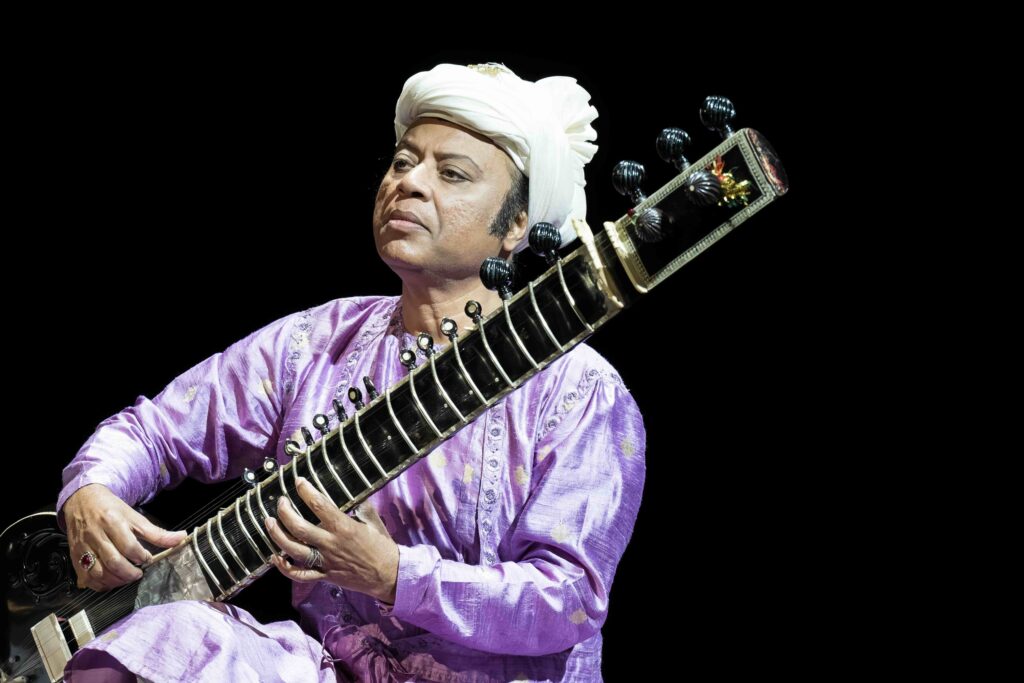
Nishat Khan
In sum, Taj Mahal dazzles as a sumptuous, inventive spectacle—one that invites opera lovers into a lush Mughal world of colour and sound. Yet the narrative’s episodic jumps and underused sitar playing leave it yearning for a more cohesive and immersive experience.
For 2026 season visit: https://grangeparkopera.co.uk/
More Grange Park 2025 reviews:
