****
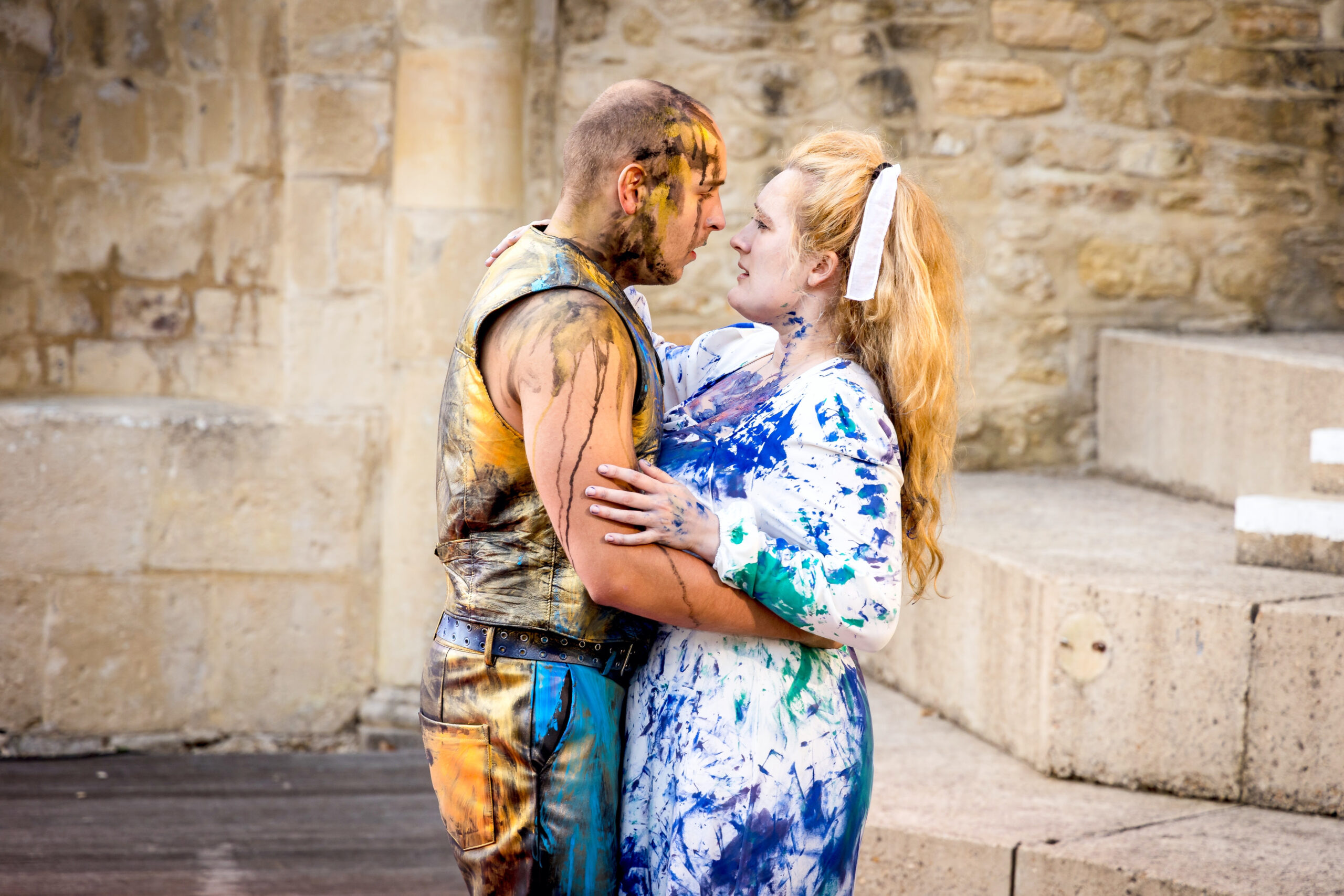
Handel’s Semele was an excellent choice for the always surpring Waterperry Opera Festival. The exquisite Waterperry Garden’s offered Handel’s drama an environment in which music, myth, and landscape coalesced to stirring effect. The open air lent freshness to the score, while the transition from daylight to dusk mirrored the opera’s descent from playful seduction to tragic collapse.
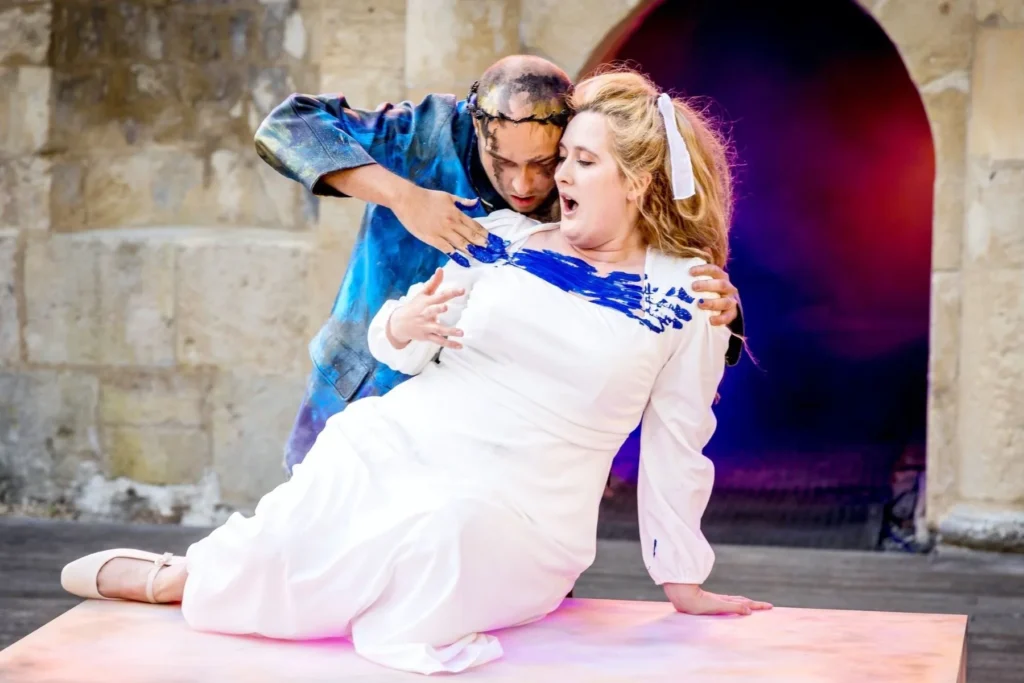
Michael Lafferty and Hilary Cronin
Bertie Baigent drew stylish, animated playing from the Waterperry Opera Festival Orchestra, never allowing the music to sag. The delicacy of “Endless pleasure, endless love” was as persuasive as the blazing ferocity of “Myself I shall adore,” and the continuo team in particular provided crisp dramatic energy.
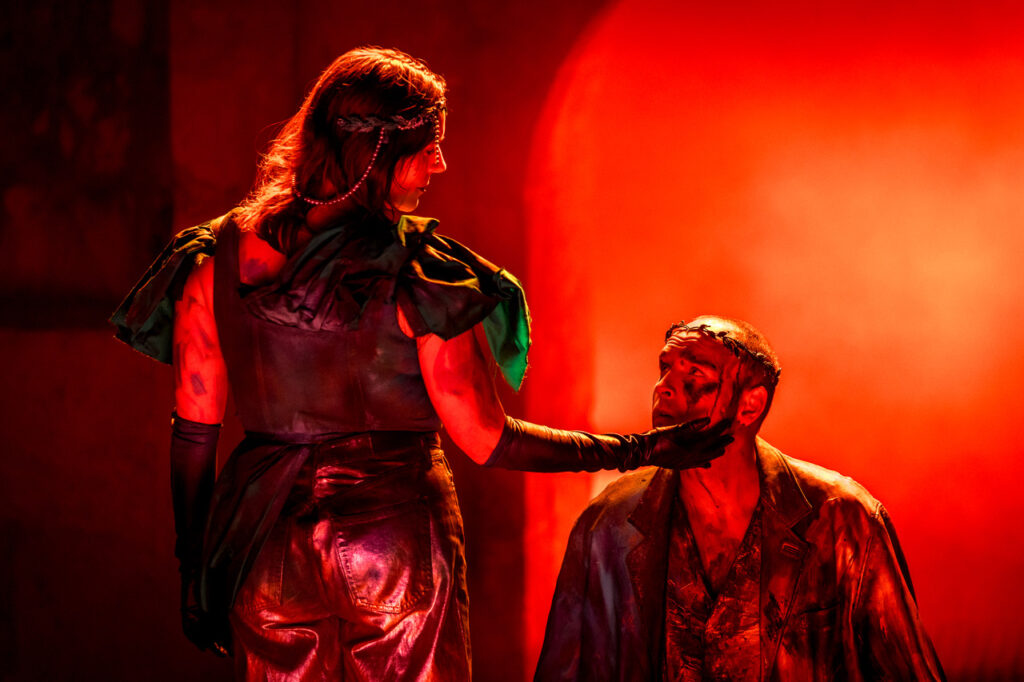
Sophie Goldrick and Michael Lafferty
Hilary Cronin’s Semele was radiant and compelling, her vocal sheen allied to a performance that charted the character’s vanity, ambition, and vulnerability with equal conviction. Opposite her, Michael Lafferty’s Jupiter combined warmth and authority, though occasionally the god seemed more affable than dangerous. Sophie Goldrick gave Juno real bite – her scenes seethed with vindictive relish. Elsewhere, Nathan Mercieca’s Athamas was lyrically sung, Sarah Winn offered a touching Ino, and Masimba Ushe made much of Somnus’s brief but scene-stealing witty presence. Phil Wilcox (Cadmus), Louise Fuller (Iris), and James Micklethwaite (Apollo) completed a cast without weak links.
Rebecca Meltzer’s direction was straightforward but effective, emphasising Semele’s hubris without gimmickry. Jennifer Gregory’s design sensibly worked with the amphitheatre’s natural contours rather than against them, while Catja Hamilton’s lighting helped nature itself become part of the spectacle. If the evening occasionally threatened to drift towards pastoral pageant, the strength of the musical realisation always pulled it back into focus.
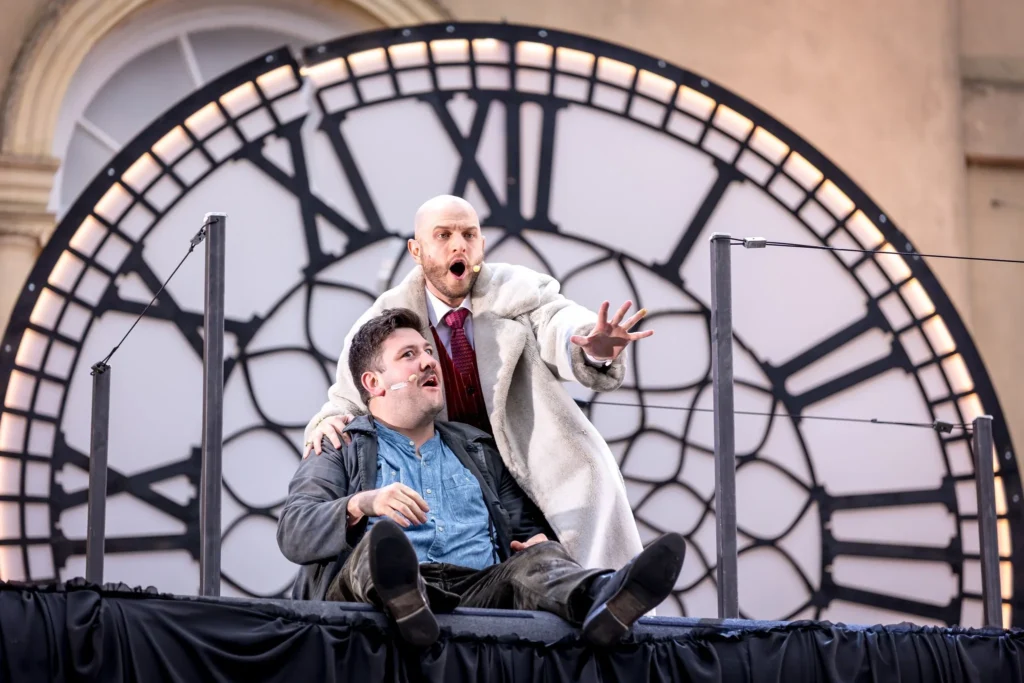
Edmund Danon and Emyr Wyn Jones
The festival’s main stage production, Mozart’s Don Giovanni, was a different matter with directorJohn Wilkie clearly wanting to add a new approach to the work, transposing it in time, place, and context.
Performed in front of Waterperry House, it was handsomely mounted and musically robust, but dramatically undermined by a concept that never convinced. Setting the opera aboard a luxury 1930s train may have sounded enticing on paper, but in execution it struggled to maintain a dramatic flow and clarity, flattening the psychological intricacy of Mozart’s masterpiece into a game of corridor-hopping.
Charlotte Politi conducted with commendable energy, and the Festival Orchestra responded with crisp articulation. The score had vitality and polish.
Edmund Danon’s Giovanni was vocally strong and suavely charismatic, and the production’s characterisation suggested a man driven by an uncontrollable sexual compulsion—occasionally tinged with regret—rather than the cold manipulator of tradition. This approach had interest, though it risked softening the sheer menace at the heart of the role. The staging offered one provocative moment: when the Don was to seduce a maid, it was first Donna Elvira who appeared, only to be swapped out for the servant. This suggested that Giovanni’s obsession with Elvira was more than opportunism, hinting at a dangerous emotional entanglement.
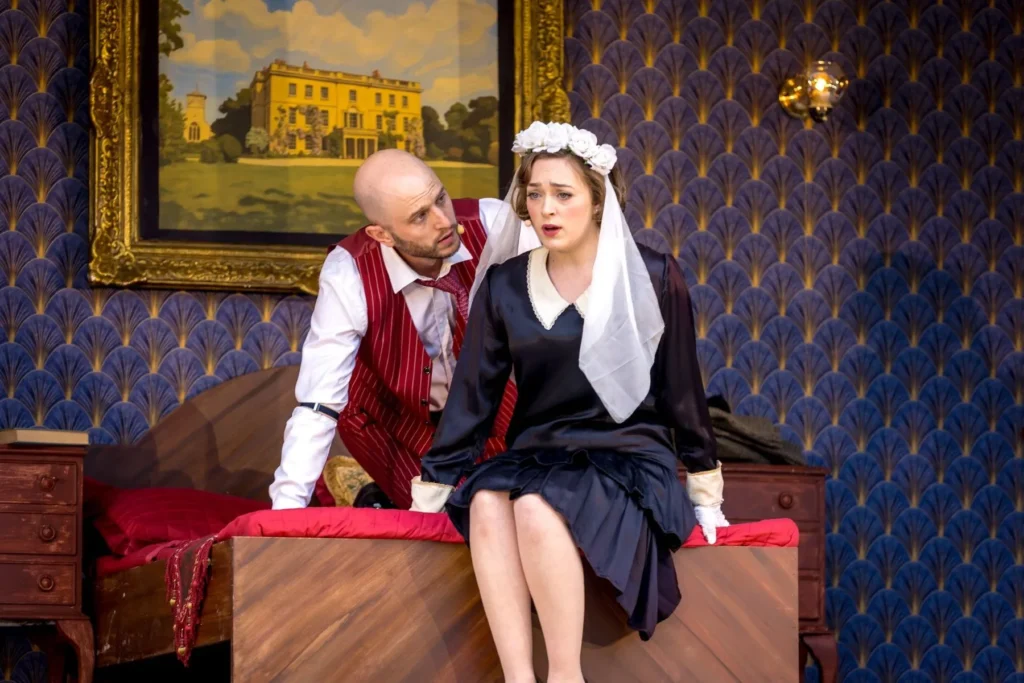
Edmund Danon and Ellie Neate
Emyr Wyn Jones’ Leporello gave one of the evening’s most accomplished performance. His comic timing was faultless, his patter precise, and he infused the servant’s complaints with a sense of humanity too often overlooked. Kira Kaplan brought steel and fcus to Donna Anna, while Simon Mascarenhas Carter sang Don Ottavio with elegance. Georgia Mae Ellis impressed as Elvira, vividly portraying her shifting passion and pain. Jonathan Eyers and Ellie Neate made a lively Masetto and Zerlina, and Jamie Woollard lent authority to the Commendatore—though here the direction faltered badly. Having the Commendatore first appear to Ottavio weakened the terrifying impact of his later apparition to Giovanni himself, dissipating the opera’s climactic shudder.
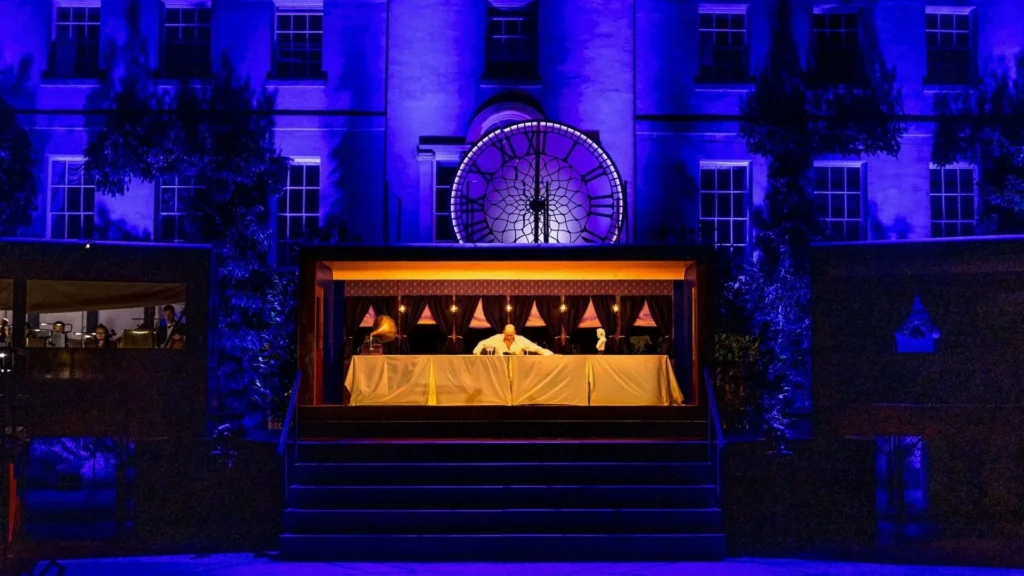
John Wilkie’s production was slickly performed in Ceci Calf’s train carriages with lighting by Jake Wiltshire. Yet despite the visual polish, the conceit remained a gimmick. Don Giovanni is a work of profound moral gravity, social as well as sexual inequalities. The endless shuffling of train compartments undermined the opera’s flow and comprehension. There were some interesting ideas such as The Last Supper reference with Mozart’s bust on the table and a hige clock opening up as the Don’s time was up worked well.
In complete contrast we had the intimate chamber work A World Turned Upside Down: The Diary of Anne Frank, performed in Waterperry’s Ballroom. Lasting just half an hour, Juliana Hall’s setting of Anne Frank’s words was treated with sensitivity and restraint.
Talia Stern’s direction wisely kept the focus squarely on Anne’s voice, while Su Choung’s musical direction ensured the piano accompaniment breathed in sympathy with the text. Ana-Carmen Balestra gave a touching performance, her youthful timbre carrying both innocence and a deeper resonance of foreknowledge.
The intimacy of the Ballroom enhanced the work’s impact—it felt less like performance, more like overhearing a private confession. Brief though it was, it lingered long after the final note, a reminder that opera at its best does not always require scale, but truth.
Main image: Hilary Cronin and Michael Lafferty
Image by Julian Guidera
