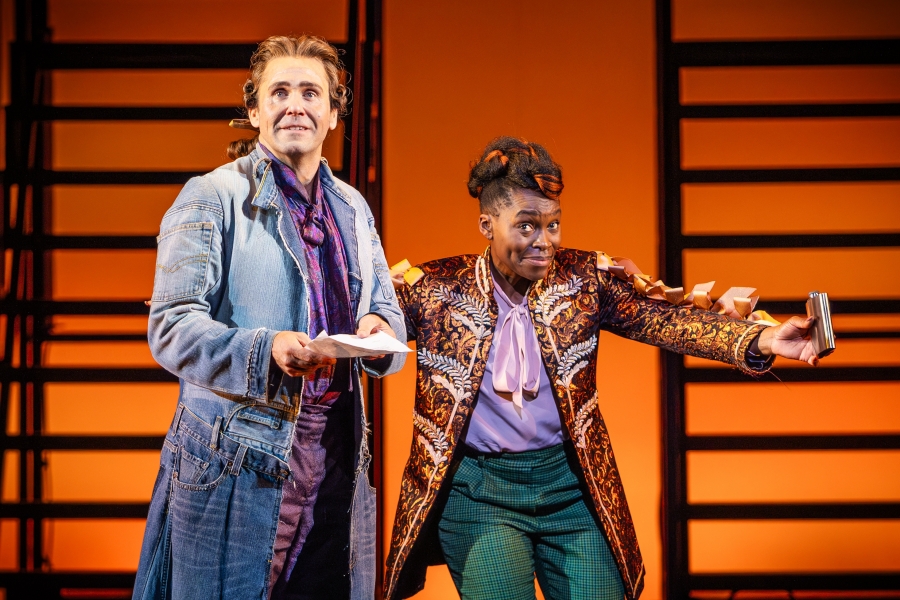
Wales Millennium Centre
Leonard Bernstein’s Candide premiered on Broadway in 1956 where its short-run was met with puzzlement and poor reviews. While Candide has found more favourable reactions in recent decades, it remains a problematic work. What exactly is it? An opera? A musical? Welsh National Opera opts to call it an operetta – which is fine, but perhaps undersells Bernstein’s score (his most ravishing, in my opinion) which is richly and fulsomely interpreted by the WNO orchestra under the baton of Ryan Adams.
The trouble is, Candide refuses to settle down for, since its premiere, it has appeared in countless amended versions – musical numbers, orchestral pieces, dialogue, and whole scenes have been substituted, swapped, cut, and repurposed. WNO’s Candide has gone its own way too, switching (for instance) the Old Lady’s big number ‘I Am Easily Assimilated’ (performed with gusto by the excellent Amy J Payne) – which Bernstein intended as a curtain opener for Act II – to the close of Act I. And why not? It works well enough.
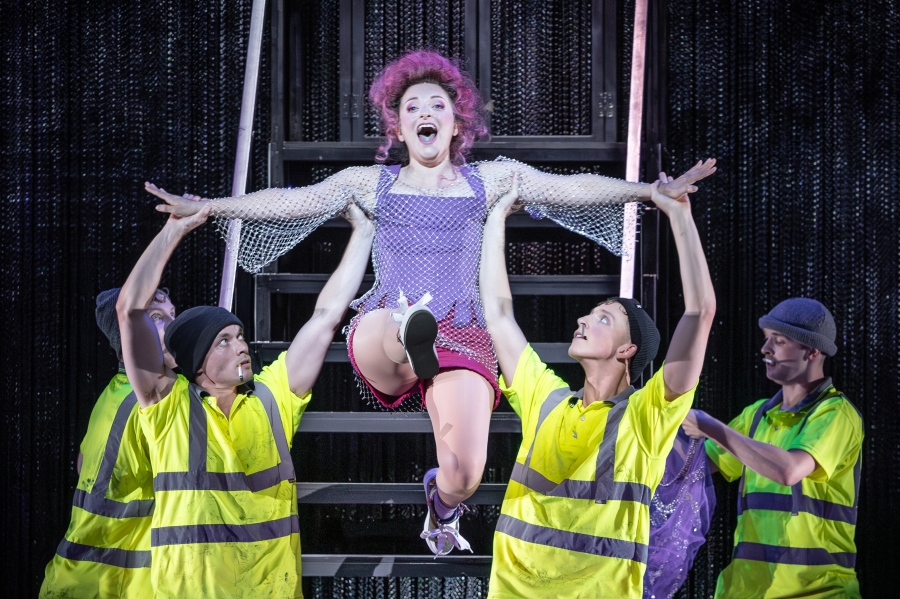
Soraya Mafi
With all the toing and froing, it is no surprise to learn that Candide has had a better outing on the concert platform than the theatre stage. It is a notoriously difficult piece to produce, jumping as it does in its narrative from Germany, to Spain, to France, to Peru, to Turkey, and back to Germany again (the order of locations is moveable, of course) as we follow the ups and downs (more downs than ups) of Voltaire’s naïve but oh-so-likable young titular hero. The plot moves at a lightning speed and any attempt directors have made to create a realistic Eighteenth-century on-stage world tend to fail because of this. Director James Bonas surpasses those problems though through the bold use of animated videos (created by Grégoire Pont) projected onto the stage. These animations complement each moment of the story, without ever being intrusive or unnecessary; in fact, they are witty additions to the equally droll music and lyrics. Reminiscent in style of school-room chalk-board drawings, the projections enhance Voltaire’s childlike fable of how optimism gets turned into pessimism.
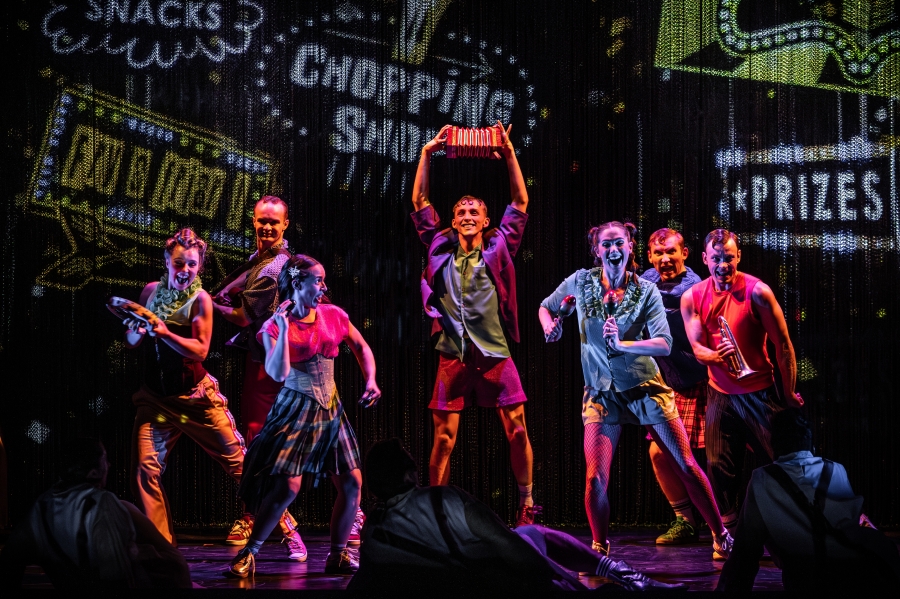
The dance ensemble
With a cast of unanimously fine singers, this Candide is a triumph on the ear as well as on the eye. Ed Lyon (a singer I have long admired) brings genuinely-felt variety to his portrayal of the hero and his beautiful tenor voice is filled with colour – as is the glorious tenor of Ryan Vaughan Davis in a small but memorable part (I want to hear him sing Mozart). As Cunégonda, Soraya Mafi throws herself into the action with abandon. She is funny and tragic in equal measure and her coloratura spectacular, ‘Glitter and be Gay’, Bernstein’s nod to Mozart, is a proper showstopper – I would call it the ultimate eleven o’clock number, but it happens too early in the show to warrant that acclaim. Still, it is excellent. Actress Rakie Ayola’s Pangloss/Narrator is a welcome presence too, and, my oh my, she can sing pretty well!
A small group of dancers help tell the story (and wheel things about the stage); the choreography, by Ewan Jones, is amusing and perfectly executed by this talented young crew. And then there is the WNO chorus, still going after all these years, and after all those cruel (unnecessary) cuts. They remain the best opera chorus in the business and nowhere is this better demonstrated than in the epic fugue-like number ‘Make Our Garden Grow’ which closes the work. It is an anthem for our time: let us try to survive as best we can in a world gone completely mad.
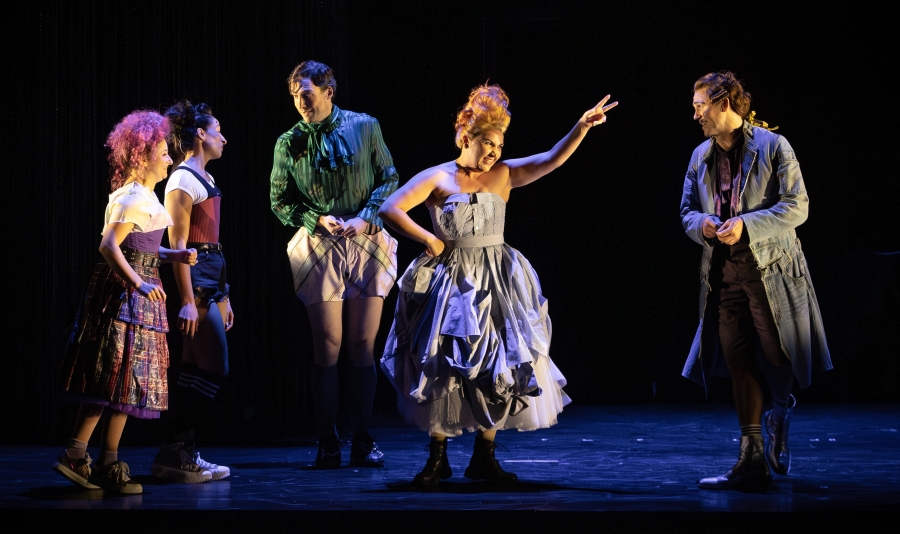
Soraya Mafi, Francesca Saracino, Jack Holton, Amy J Payne and Ed Lyon
WNO’s Candide is an enjoyable romp, yes, but it is full of heart too, and Voltaire’s underlying commitment to improving society continually shines through. It is the Best of all Possible productions.
Touring until October 7
https://wno.org.uk/whats-on/candide
Main image: Ed Lyon and Rakie Ayola
Images: Craig Fuller
