*****
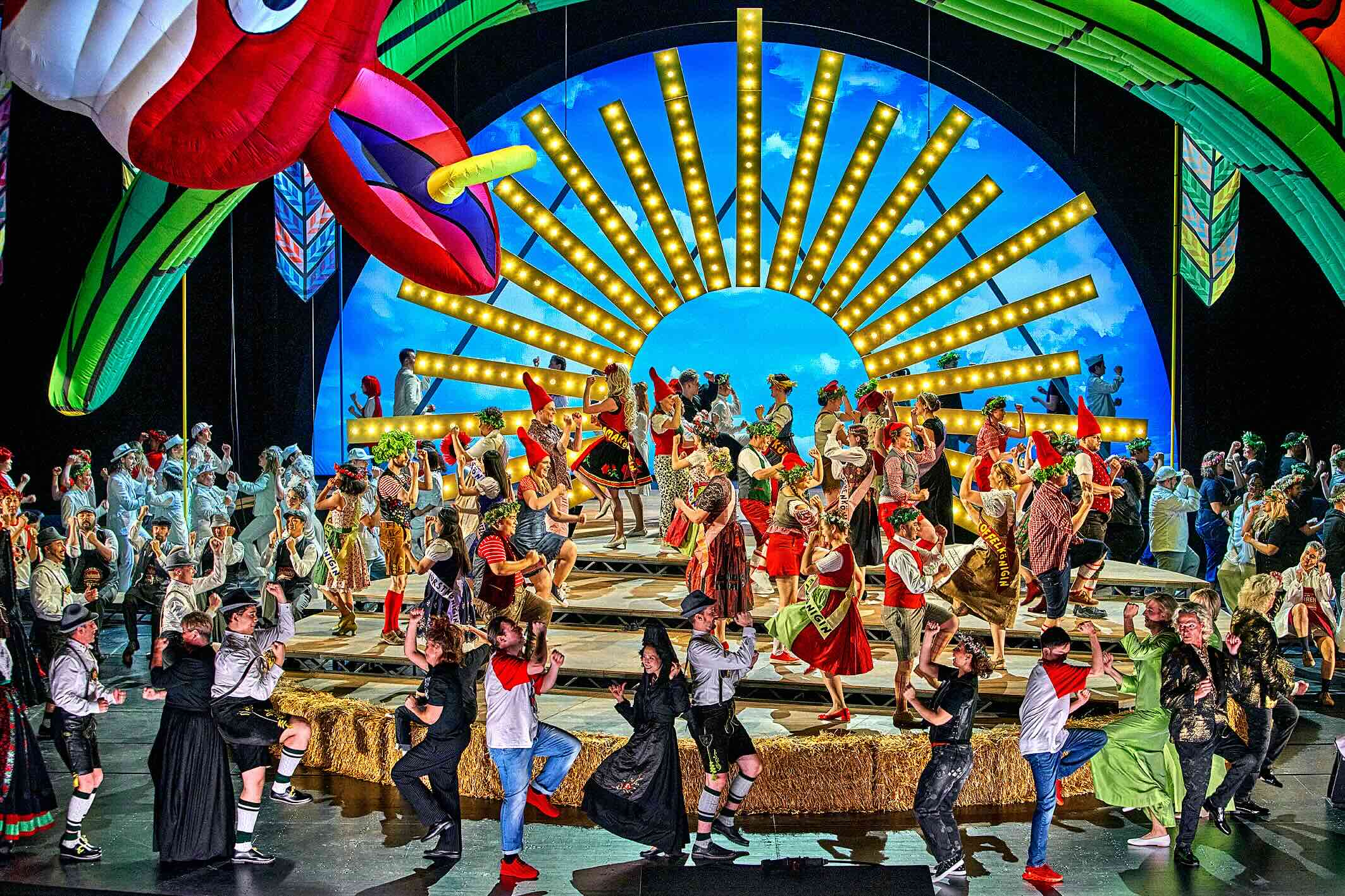
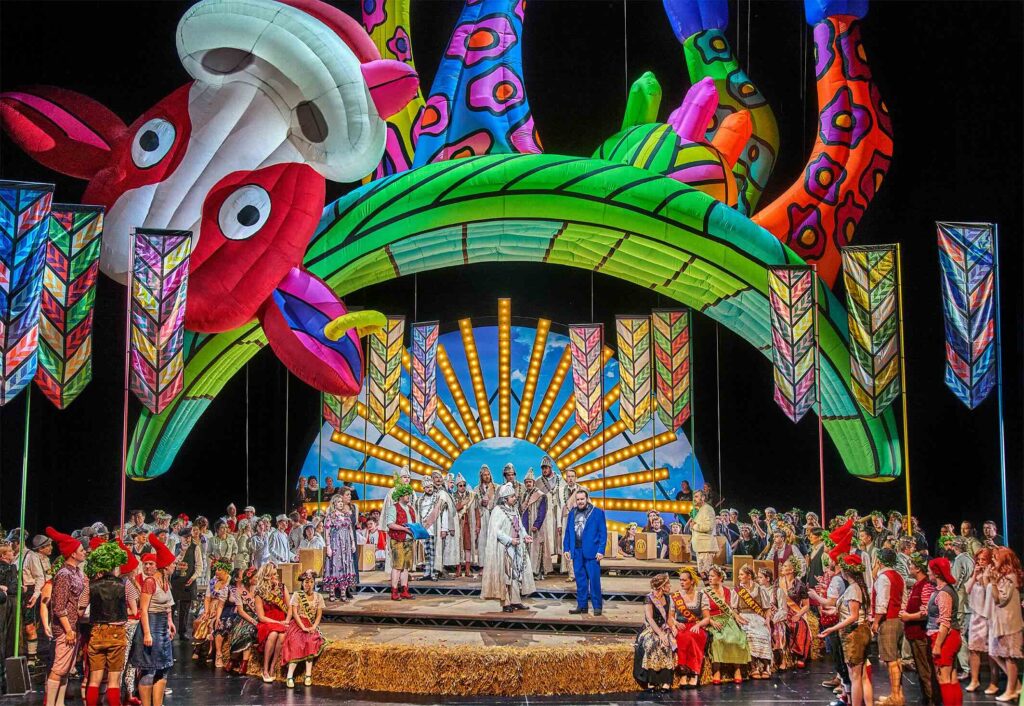
Wagner is not often associated with levity, but Die Meistersinger von Nürnberg remains his great comic outlier: a sprawling, richly textured celebration of art, tradition, and renewal. That didn’t stop director Matthias Davids from turning it into something resembling an agricultural show —complete with hay bales, Merkel look-alikes, and, in Act III, a giant inflatable cow presiding over the climactic singing contest like a bovine monument to irreverence.
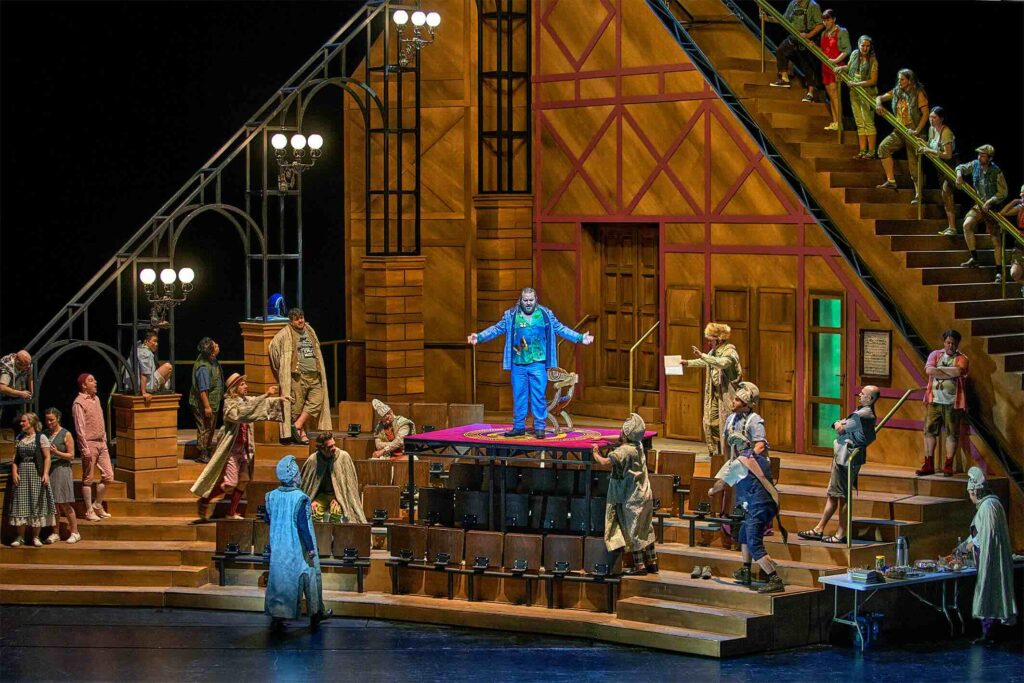
Yet for all its theatrical mischief, for all the playful irreverence and delightful designs by Andrew D. Edwards, it was the quality of the singing and the musical direction that gave this performance its real stature. Beneath the inflatable kitsch and carnival slapstick, Wagner’s score emerged with clarity and finesse, thanks to the assured baton of Daniele Gatti, who brought both grandeur and flexibility to this famously generous work. The orchestra played with luminous transparency—allowing voices space while never losing the work’s harmonic and rhythmic drive.
Ensemble and Choir, Bayreuther Festspiele
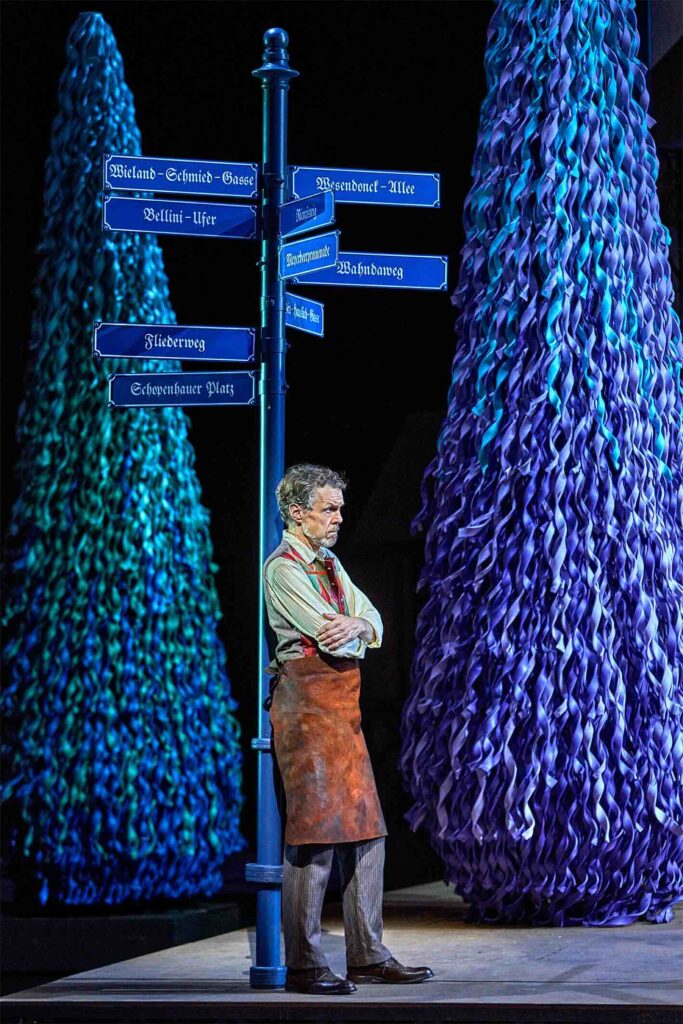
At the heart of the performance was Georg Zeppenfeld’s Hans Sachs. Though his voice may not carry the voluminous punch of some of his predecessors in the role, Zeppenfeld offered something rarer: an eloquent, inward performance shaped by a deep sensitivity to text and line. His Sachs was humane, fallible, and ultimately moving—particularly in the final monologue, where philosophical gravity replaced comic caprice.
He was excellently partnered by Michael Spyres, whose Stolzing had an easy, lyrical fluency and a bright, clear top. Spyres’s tenor is as supple as it is secure, and his Prize Song—often a moment of high anxiety for the tenor—was shaped with both beauty and poise. Christina Nilsson, as Eva, combined radiant vocalism with unaffected charm. Her soprano soared with ease, rich in colour yet never overstated. Her duet work with both Sachs and Stolzing glowed with emotional conviction. While she is, of course, the prize to be won, she came across as a more modern character, being the person who finally hands back the prize chain to her father after Stolzing had also rejected it.
Georg Zeppenfeld
Michael Nagy’s Beckmesser was a triumph of musical comedy. It is a role that tempts singers towards the grotesque, but Nagy kept the buffoonery musically anchored. His diction was immaculate, his comic timing razor-sharp, and his vocal tone—unusually warm for the role—brought nuance to a character often reduced to caricature. His descent into musical chaos in the final act was brilliantly executed. In this production Beckmesser reacts to his defeat by Stolzing firstly by trying to deflate the huge floating cow and then, as the opera closes, still bickering with Hans Sachs.
Matthias Stier was a lively David, youthful in tone and physically agile, and the chorus, frequently drawn into the character’s charm and comic mayhem, sang with admirable cohesion.
Ensemble and Choir, Bayreuther Festspiele
Yet, however brightly Meistersinger plays on stage, it casts a long shadow off it. It is well known that this was Hitler’s favourite opera—he attended it regularly and saw in its celebration of the German Volk, artisanal tradition, and cultural purity a reflection of his own ideological fantasies. Wagner’s notoriously antisemitic writings and the character of Beckmesser—long interpreted by some as a musical and dramatic caricature rooted in 19th-century Jewish stereotypes—have made the opera deeply problematic for modern directors. In the previous Barrie Kosky production a large Jewish head had dominated the meadow field, with Beckmesser seen by the director as representing Hermann Levi.
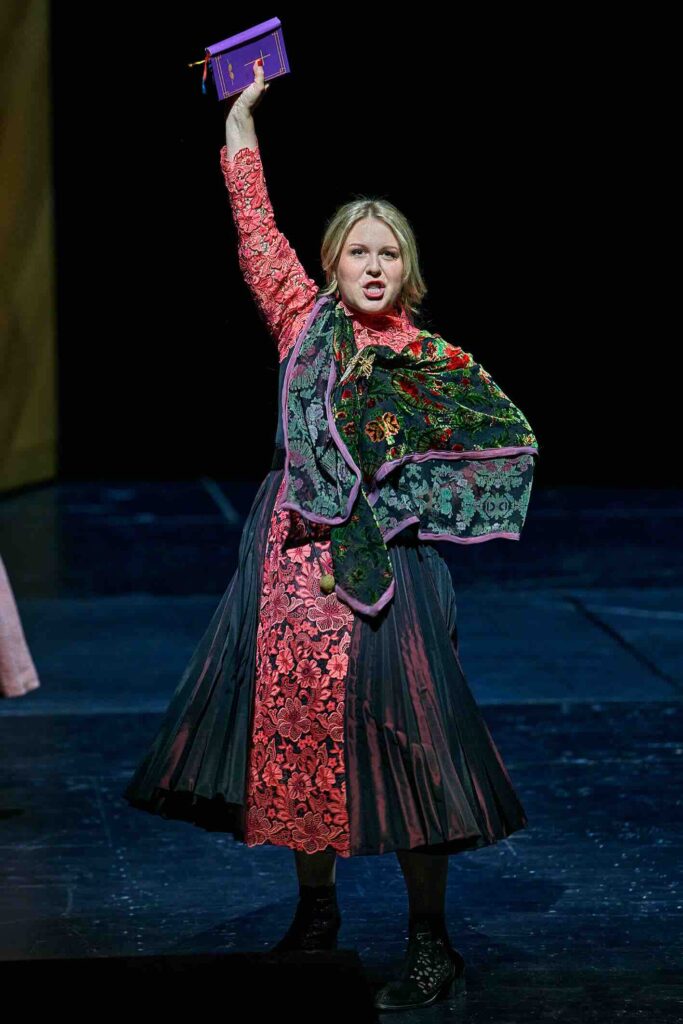
Christina Nilsson
For all the music’s soaring nobility, Die Meistersinger’s closing paean to German art has often been read, particularly in the wake of the Nazi era, as both triumphalist and exclusionary. Directors wrestle with how to present the work’s nationalism and celebration of German culture without ignoring its darker undertones.
To his credit, Davids doesn’t attempt to neutralise the opera’s ideology with moral lectures. Instead, he punctures it with satire. The Meistersingers are shown not as cultural heroes but as an ageing men’s club, increasingly ridiculous in their rules and rituals. Beckmesser’s humiliation is comic rather than cruel, and Sachs, though given space for serious reflection, is not granted the last word. In fact, the closing image—of the young couple slipping away from the festivities and leaving Sachs to deliver his patriotic warning alone—quietly but decisively deflates the notion that tradition must always be preserved.
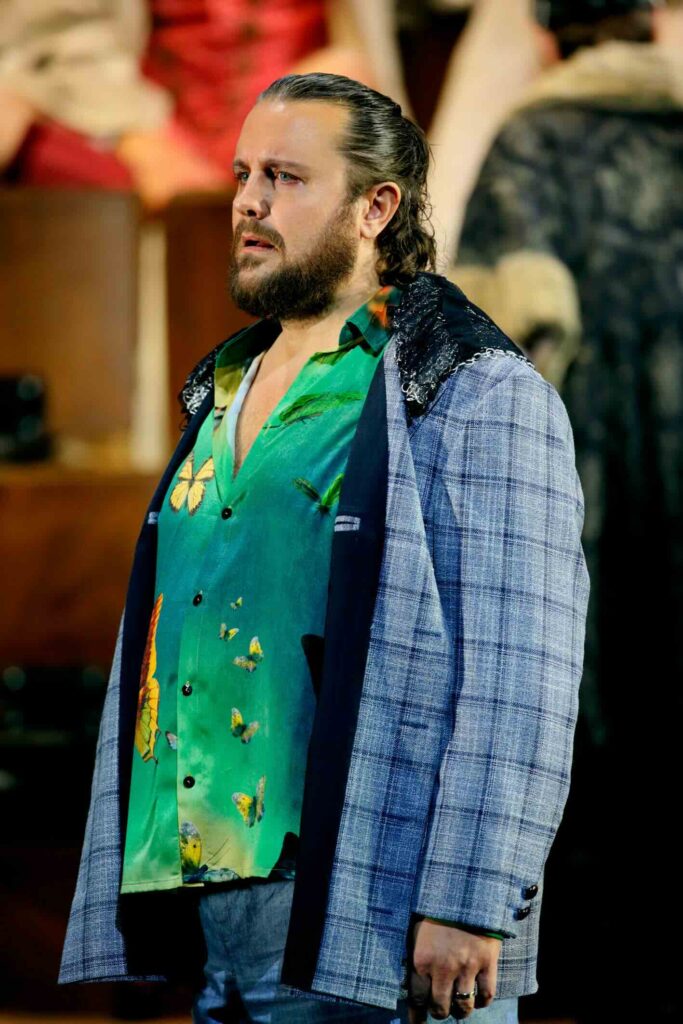
Michael Spyres
Fortunately, the musical tradition was anything but dusty. Gatti paced the evening with care, letting Wagner’s long arcs unfold naturally, never resorting to bombast. The score’s myriad textures—lyrical, contrapuntal, often brimming with irony—were handled with admirable balance. If some of the staging veered towards the absurd, the music-making consistently reminded us of the opera’s stature.
A Meistersinger to raise eyebrows, yes—but also one to admire. It made its point through laughter rather than sermon, and trusted the power of Wagner’s score to speak for itself—flaws, grandeur, and all.
https://www.bayreuther-festspiele.de/en/programm/auffuehrungen/die-meistersinger-von-nuernberg
Until August 22

One thought on “A laughing cow and glorious musicianship, Die Meistersinger von Nürnberg, Bayreuth Festival”