****
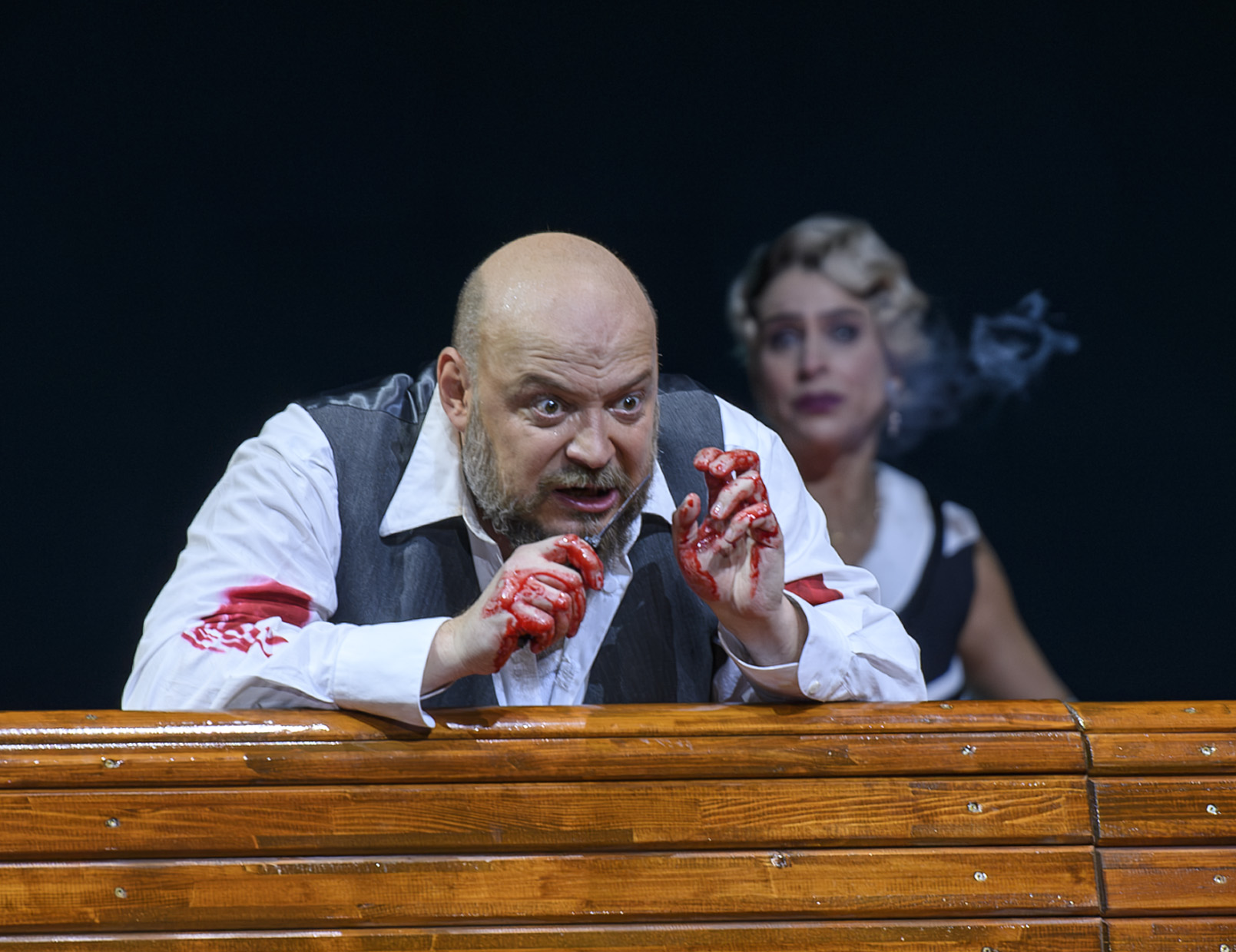
In Shakespeare’s Macbeth, the tyrant reflects on his wife’s death with the immortal words: “sound and fury, signifying nothing.” It is tempting to dismiss Verdi’s Macbeth as staged by Krzysztof Warlikowski at the Salzburg Festival, with Shakespeare’s famous line about “sound and fury, signifying nothing”. It was a powerful evening of theatre yet there were moments when the director’s fevered imagination seemed to work against both the music and the drama.
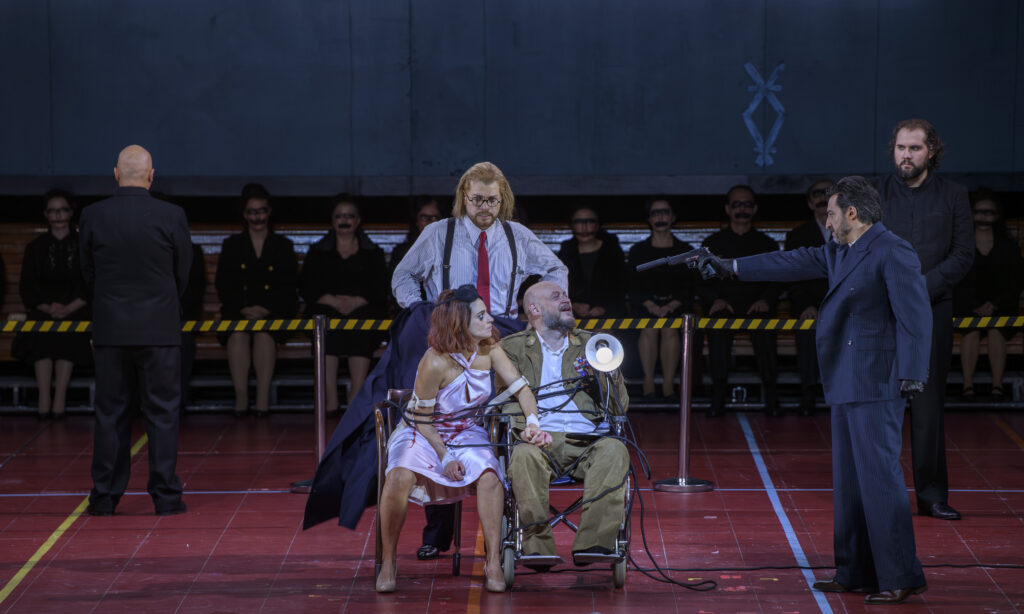
Here was a production that rewrote the psychological fabric of the piece with almost obsessive zeal. In Shakespeare, Lady Macbeth dies offstage, destroyed by ambition. In Warlikowski’s vision she lives on, stark raving mad, while Macbeth himself becomes a drug-dependent wreck in a wheelchair. The clue to Lady Macbeth’s decline is evident from the outset when the curtain rises on the smartly dressed woman waiting for a gynaecological examination, apparently to be told she cannot have children. This theme of childlessness continues until Macbeth is castrated during his second encounter with the witches. Ambition, here, is replaced by infertility as the cause of their actions and the madness is brought on by the fact that Banquo’s heirs will be the inevitable victors.
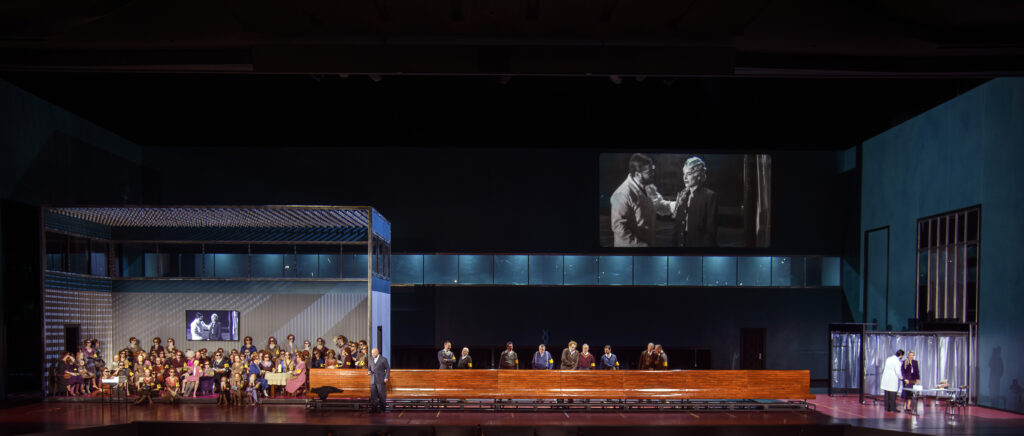
Małgorzata Szczęśniak’s set sprawled across the Großes Festspielhaus stage. A witches’ coven slides in on one side, a medical gurney for Duncan’s murder on the other side; rows of seats are wheeled in for the couple’s triumph and again for the banquet scene; a high walkway doubles as a gallery for arrivals, while live and recorded video projections loom above the action. The aesthetic suggested a modern dictatorship. Asmik Grigorian’s Lady Macbeth and Vladislav Sulimsky’s Macbeth were styled as Perón-esque rulers in chic designer garb, waving to the crowds before collapsing into cruel laughter behind closed doors. Their banquet scene, with Grigorian’s glittering brindisi countered by Sulimsky’s vision of Banquo, culminated grotesquely with the revelation that the feast was a child’s doll. Other dolls are pulled apart in other scenes.
That macabre child imagery ran through the evening. During “Patria oppressa” Lady Macduff poisoned her offspring, their corpses later laid across the front of the stage. When Banquo’s descendants confronted Macbeth, they appeared as ghoulish miniatures with grotesquely oversized heads. The witches were played by children in blank-faced masks, while the chorus (the glorious sounding and vast Vienna State Opera Choir wore armbands emblazoned with nuclear hazard symbols. At the end, a video showed a boy – Banquo’s heir Fleance (?) – wandering through a landscape. The Macbeths themselves remained bound together, Lady Macbeth having slashed her wrists with the cord of a lamp she had lugged throughout her madness.
The director also served up a feast of other ideas: child tennis players whacking balls across a set designed as a medieval tennis court complete with spectators; references to Pasolini films; a grotesque allusion to the massacre of the innocents; voodoo dolls brandished like stage props. The effect was cumulative and overwhelming. Frankly, less would have been more. As well as the obvious witches and their double-speak predictions we have tarot cards being played, the Odeipus Rex oracle and others I probably missed!
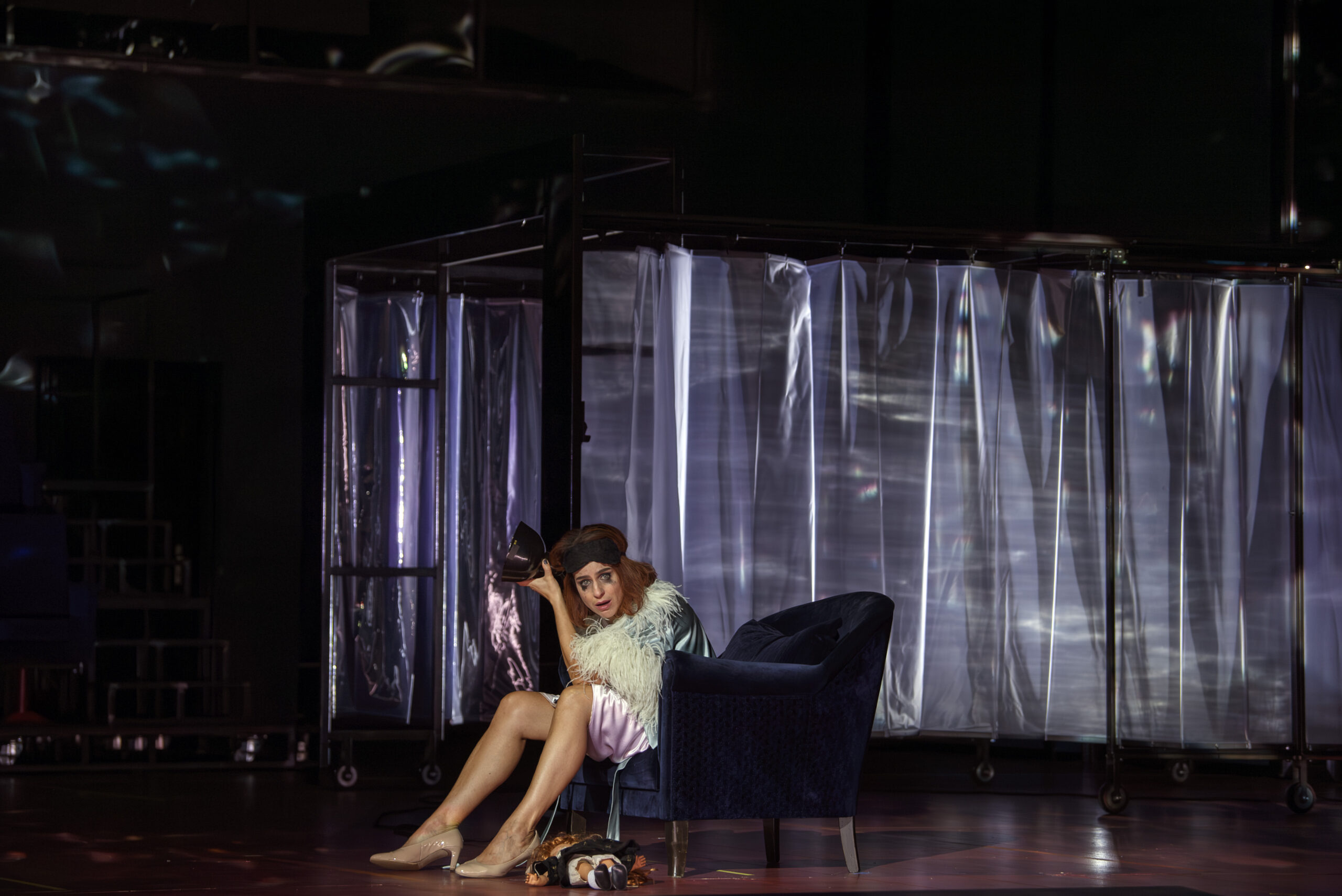
Asmik Grigorian
Amid this welter of symbolism, the singers shone. Even if she is not a natural Verdian, Grigorian was a mightily impressive Lady Macbeth. She exploited her vocal range and magnetic stage presence to chilling effect, charting her character’s descent with terrifying conviction. At first, Grigorian lent Lady Macbeth an unexpected glamour, which made her eventual collapse all the more pitiable. Her lyrical outpouring “La luce langue” in Act II was a highlight, as was her sleepwalking scene with “Una macchia è qui tuttora!” with here more deranged ritual than dreamy trance.
Sulimsky was her equal, delivering a hangdog Macbeth crushed by his wife’s urges. As the bloodletting spiralled, he became a broken man barely clinging to reality. His final aria in Act IV “Pietà, rispetto, amore” was deeply affecting, although by now he is just a crippled shadow of the great warrior he had been. Together, Sulimsky and Grigorian forged a disturbingly convincing partnership, their vocal strength matched by physical intensity.
Verdi’s Macbeth is essentially a two-hander, but the supporting cast impressed. Tareq Nazmi was an imposing Banquo, as ambushed by assassins his Act II “Come dal ciel precipita” nobly sung and making one wish Verdi had given him more before dispatching him. Joshua Guerrero was a true Verdian tenor with an ardent, grief-stricken “Ah, la paterna mano”, full of sorrow yet rousing in determination. Davide Tuscano made what he could of the limited role of Malcolm.
The large Vienna State Opera Chorus gave the audience an evening of magnificent singing, exuberant and passionate when needed, and gentle at others. They filled the stage and their sound the auditorium. In the pit, Philippe Jordan steered Verdi’s score with finesse, balancing demonic eruptions with patriotic choruses, and giving the music its best chance to soar.
Warlikowski’s Macbeth was undeniably provocative, at times even arresting. But it ultimately smothered Verdi under layers of heavy-handed symbolism that neither the story nor its operatic version require. This was psychobabble theatre —redeemed by the singers and musicians, who gave the evening its true value.
https://www.salzburgerfestspiele.at/en
Main image: Vladislav Sulimsky and Asmik Grigorian
Images: Ruth Walz
