****
There is a particular pleasure in watching a small company do a big opera properly, and West Green House Opera’s Tosca, the closing production of its 2026 season in the Green Theatre, did precisely that. Suzanne Chaundy, making her UK debut fresh from Melbourne Opera’s Ring, and the conductor Alice Farnham brought Puccini’s thriller off with a clarity, a wit and a tenderness that many a grander house fails to manage.
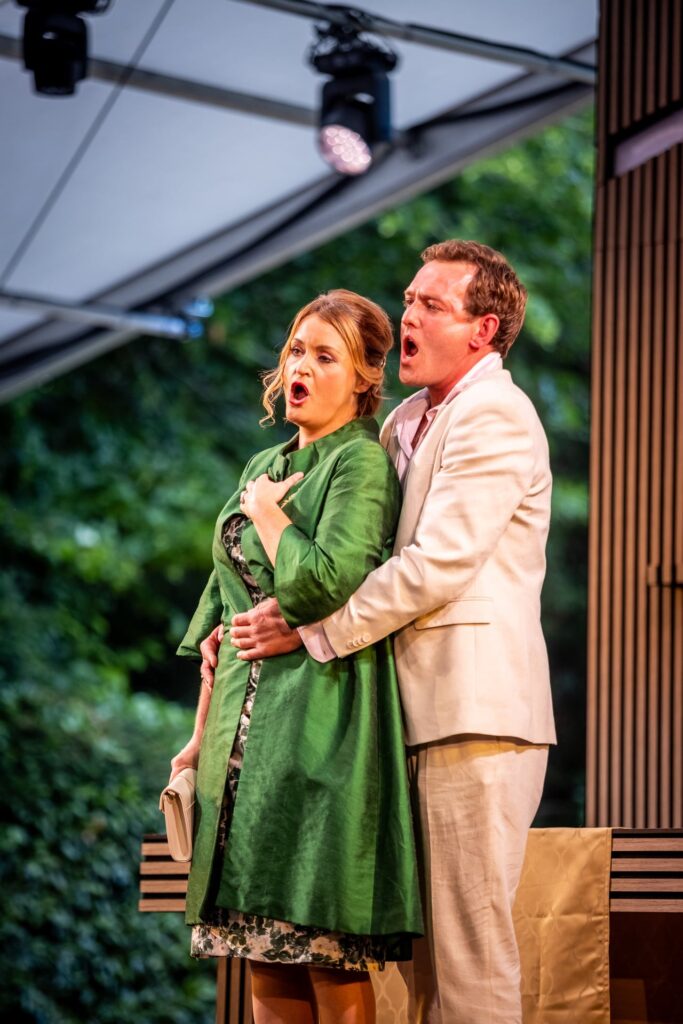
Mari Wyn Williams and Sam Furness
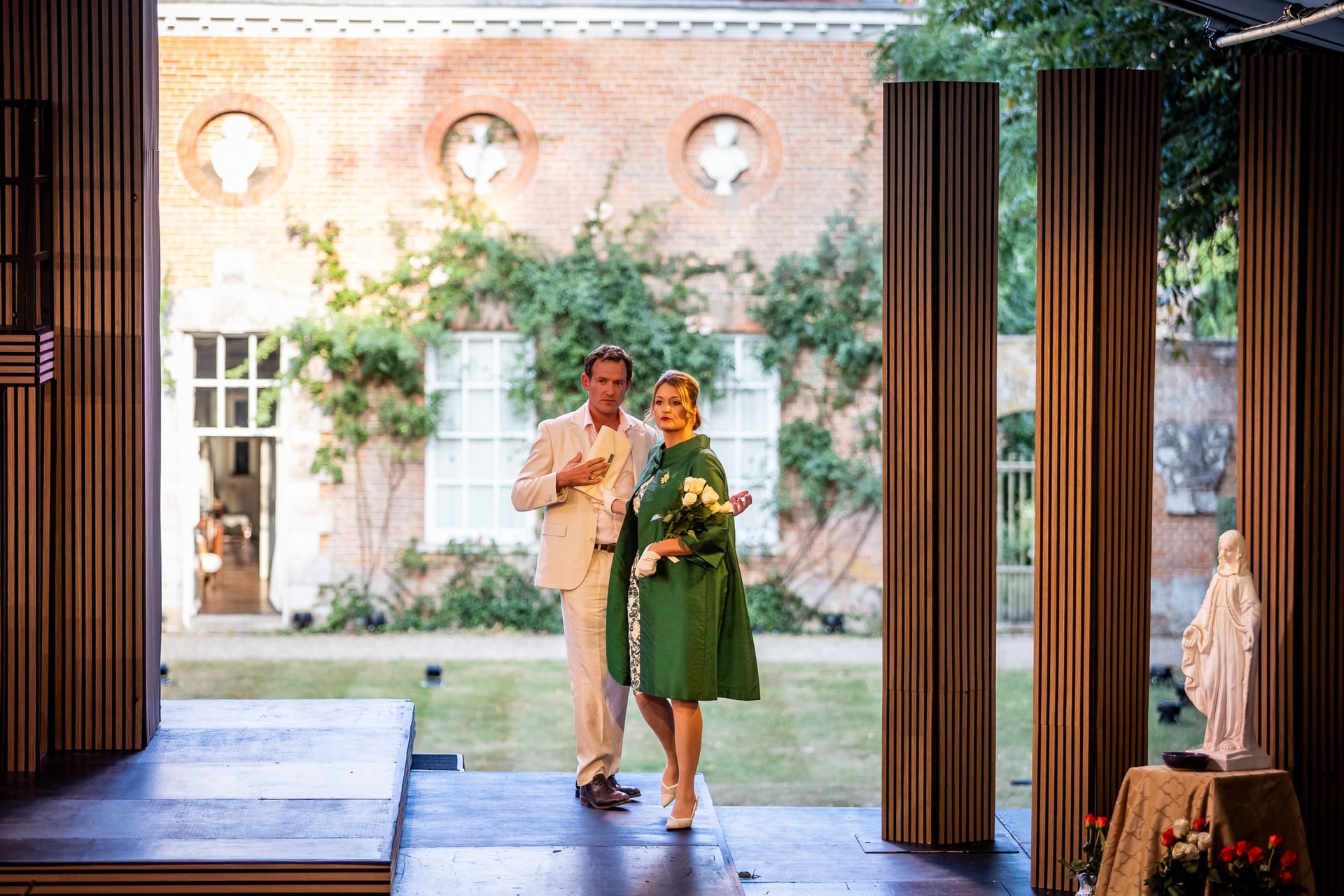
The set was simple but wonderfully effective, and the cleverness lay in how easily and sleekly it transformed, from the church of the first act to Scarpia’s apartment in the second and the place of execution in the third, with a smoothness that never held up the drama. Chaundy relocates the piece to the 1960s, and the updating is done with a light, intelligent hand, full of small touches that reward attention rather than shout for it. Does the 1960s setting work? Not particularly despite the programme notes about political assassinations but it looks great and does not jar.
Those touches run all the way through. The shepherd becomes the Sacristam’s assistant, singing that famous, pretty opener to Act Three. In the last act Tosca reads aloud the letter Cavaradossi has been trying to write to her as he awaits execution, a lovely stroke that deepens the pathos. The condemned man holds up the dress his sister has left for him as a disguise, and it is comically, hopelessly too small. Best of all is the moment Scarpia, in this record-player age, puts on an LP of Tosca singing, and the album sleeve carries a photograph of Mari Wyn Williams herself, in one shot wearing the very outfit she has on in Act One. It is the sort of detail that makes you grin and lean forward.
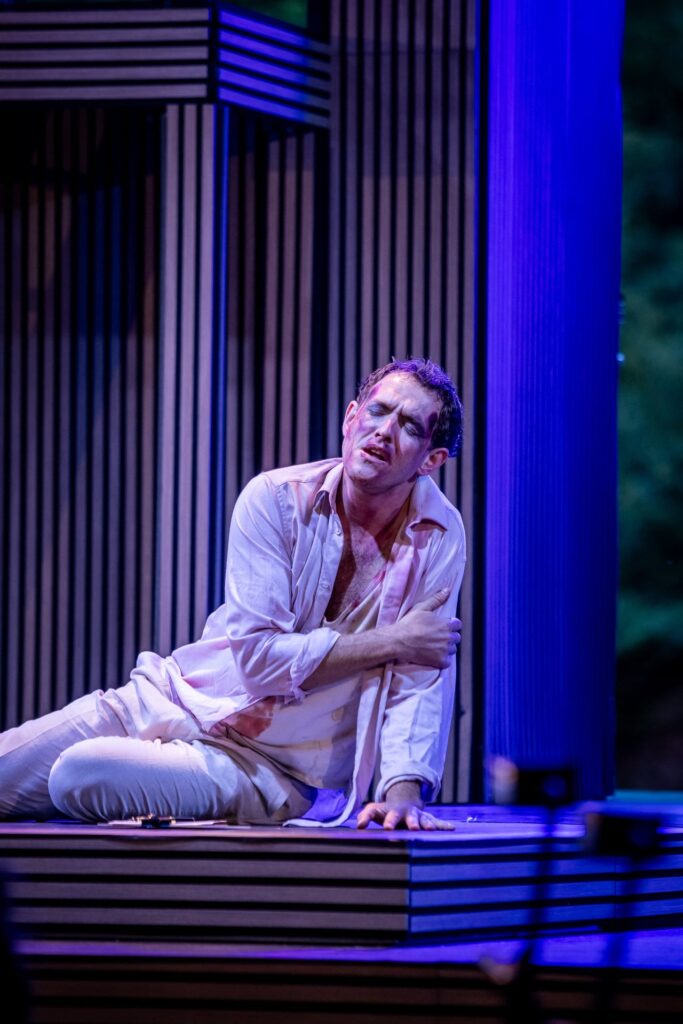
Sam Furness
The design and staging are full of this kind of intelligence. The execution is delivered not by a firing squad but by a single soldier, one carabiniere, stepping forward to fire the fatal shot at Cavaradossi. Tosca herself is dressed in gorgeous period haute couture, every inch the diva, while her painter lover cuts an altogether more relaxed figure.
Sam Furness gives us a Cavaradossi who is genuinely happy, charming and appealing, not the brooding romantic hero but a warm, playful, thoroughly likeable man, dressed in what looks like a chic linen suit and a pink shirt. There is a beautiful bit of costume storytelling here: the linen trousers begin crisp and smart, and as his ordeal grinds him down they lose their shape entirely, crumpling the way linen does, so that his very clothes chart his descent. There is a mark on his temple, too, where the piercing torture Scarpia refers to has done its work, a small, telling detail of continuity that many productions cannot be bothered with.
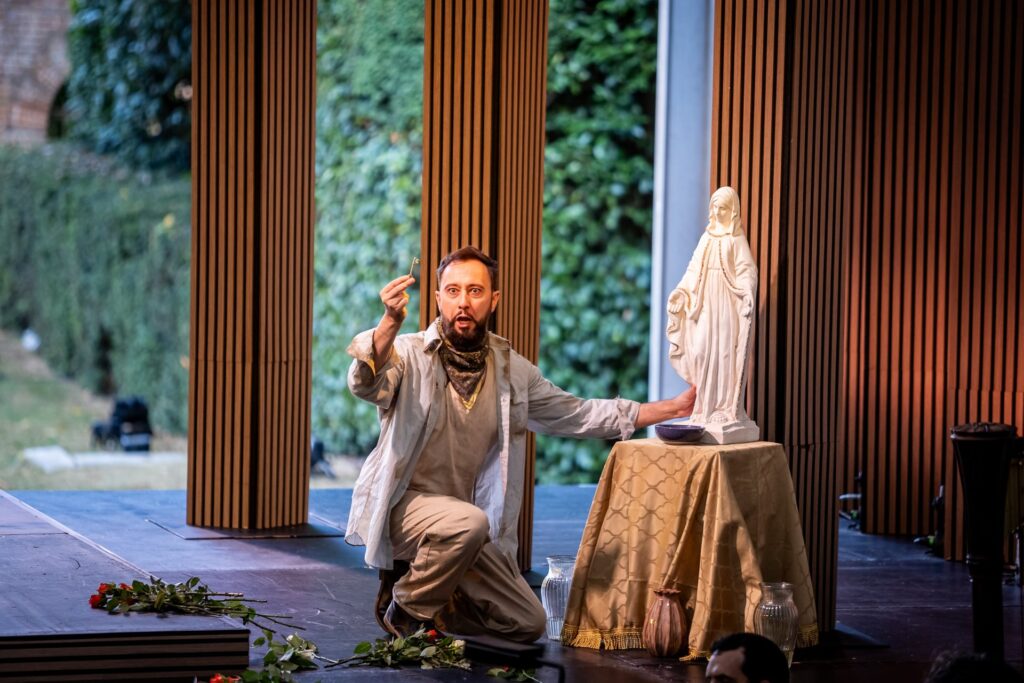
Ronald Nairne
The chemistry between the two lovers is real and delightful, established early in a playful throwing of paint brushes back and forth, so that by the time the tragedy closes in we believe in them completely. Vocally, Williams has a strong, ample and warm voice that hints at her abilities in the Wagner repertoire as much as in this Puccini, and a stage presence to match the couture. Furness, meanwhile, seems to be developing out of the pure lyric tenor and into heftier territory, and while the top rings out excitingly, what truly shines in this performance is his detailed singing the moments that call for warmth, tenderness and beauty rather than sheer volume, which he shapes with real care.
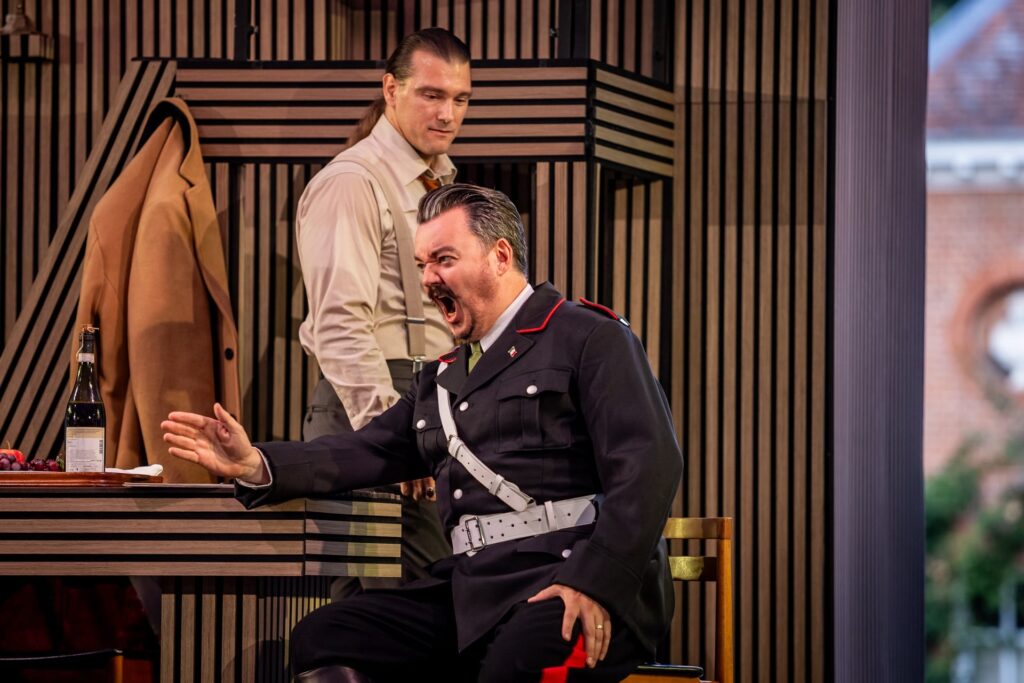
Jean-Kristof Bouton and Adam Sullivan
Alice Farnham gave a fine reading of the score, drawing all the passion the drama demands from her reduced orchestra yet always tender and perfectly in step with her singers. Jean-Kristof Bouton’s Scarpia is a sure-voiced villain, but a young and virile man rather than the ageing, decrepit lecher he is so often made to be. It makes his menace far more plausible and far more dangerous. The end of the first act is staged with real theatrical nerve, Scarpia standing at the altar, flanked by nuns, to sing his appalling aria of lust and calculation while the church fills around him, and the cast, small in number, nonetheless raise a genuinely thrilling Te Deum.
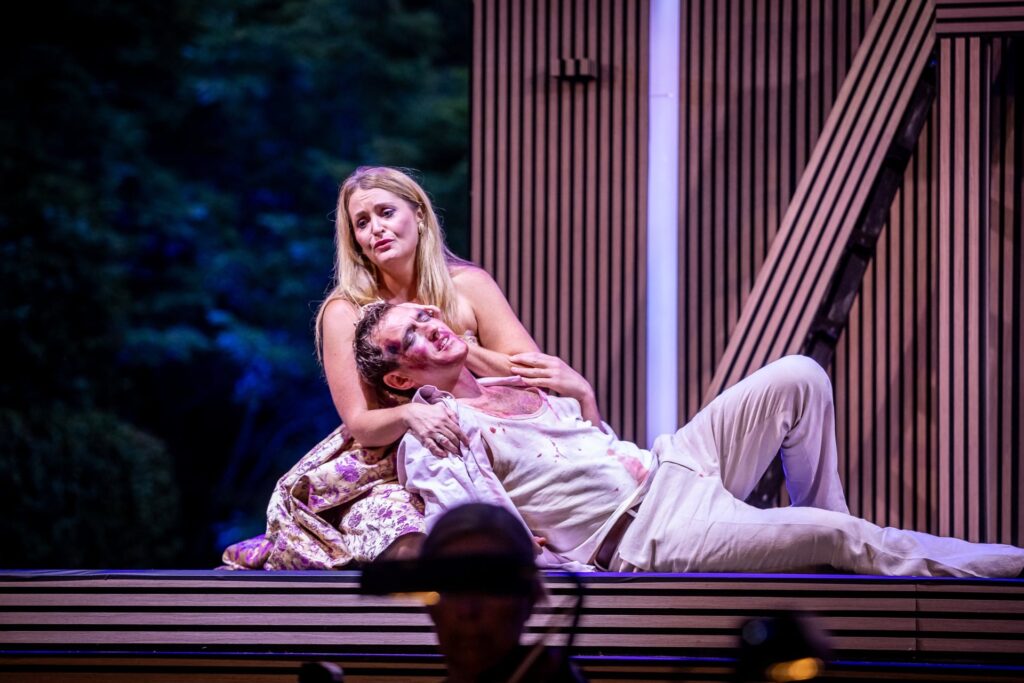
Mari Wyn Williams and Sam Furness
Nor should the smaller roles go unremarked, because this is a production in which everyone acts with attention to detail. Ross Ramgobin’s Sacristan is a real character study, fearful of Scarpia, comically outraged by the godless painter, yet perfectly able to sniff out the joint in Cavaradossi’s hamper and take it off for a quiet smoke. Ramgobin impresses wherever he sings, and here he gives the kind of detailed, generous, genuinely funny character work that makes an evening feel alive in every corner of the stage. Around him, Adam Sullivan is a suitably gruff Spoletta and Ronald Nairne a robust Angelotti, while Alaw Grug Evans is charming as the shepherdess, here reimagined as the sacristan’s assistant, washing the painter’s brushes as she sings.
The reduced orchestration is by Jonathan Lyness and the design by Richard Studer, both of Mid Wales Opera renown, a company where a great many of our developing Welsh singers have performed, and still do, Mari Wyn Williams among them. The pair are also behind West Green House Opera’s other summer offering, The Magic Flute, which fielded its own strong array of Welsh singers, only reaffirming the point.
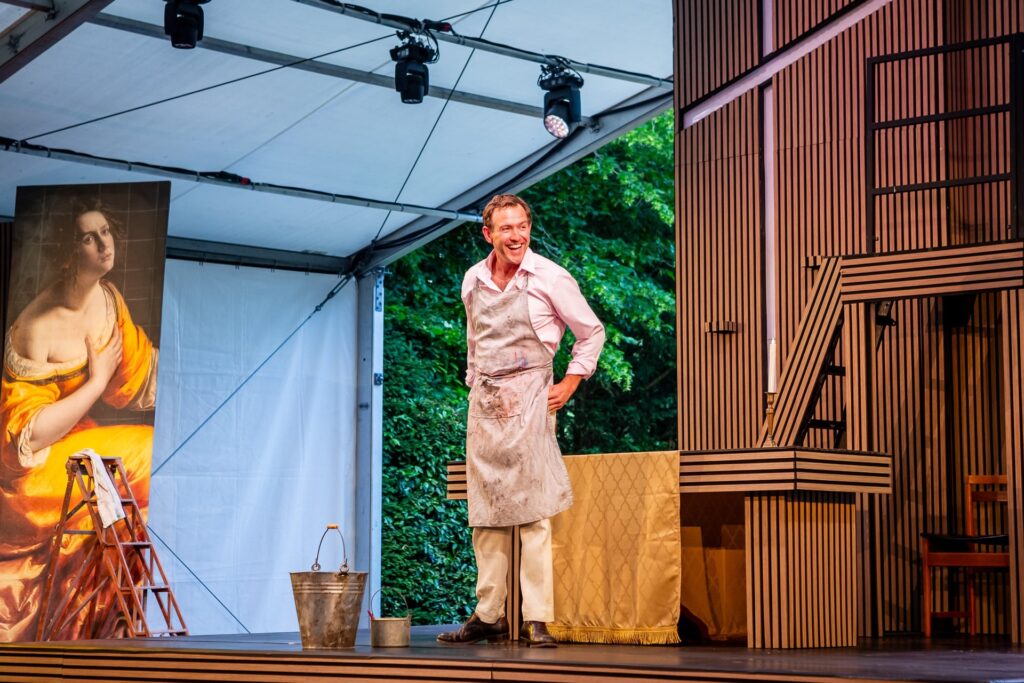
Sam Furness
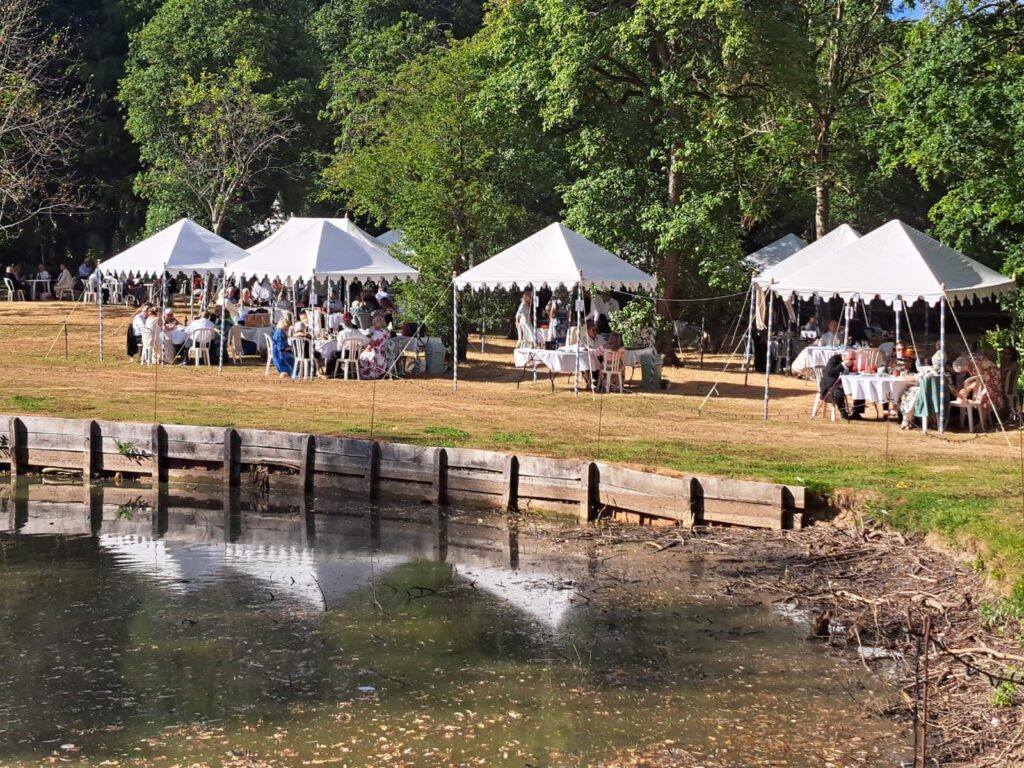
A thoroughly enjoyable Tosca, beautifully sung, full of heart and wit, and proof that scale is no substitute for care.
Check out the 2027 season and early now.
westgreenhouseopera.co.uk
