***
Some productions jolt you like a live cable. Unfortunately, the thematic current running through Yuval Sharon’s Lohengrin at Bayreuth wasn’t the thrilling charge of Wagner’s drama—it was the sort of shock that a concept can be so overdone, leaving your battery flat.
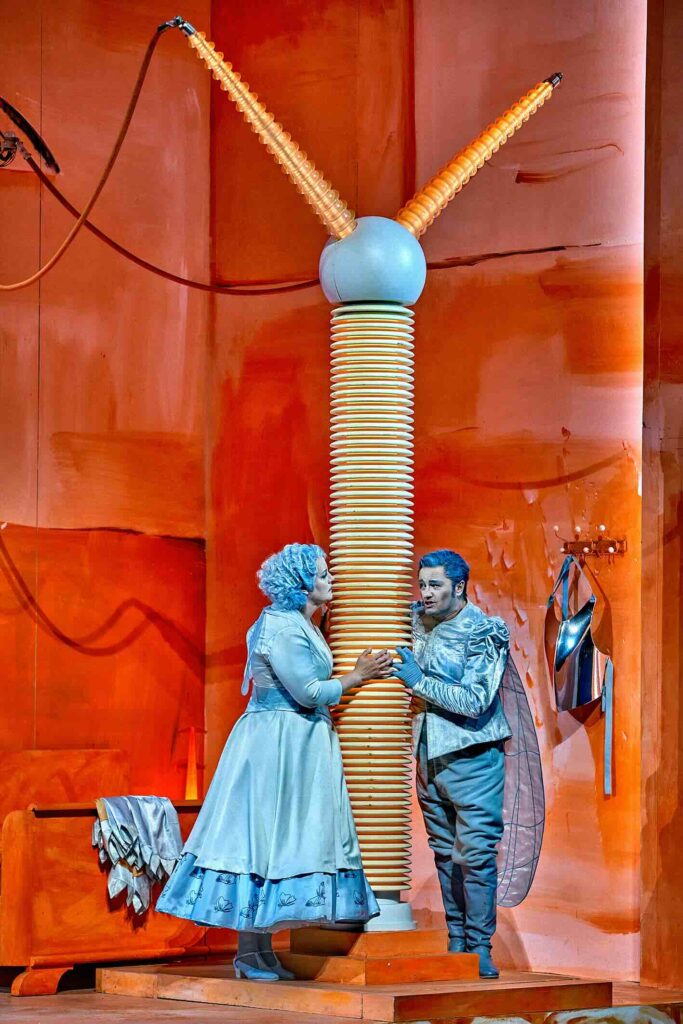
Elza van den Heever , Piotr Beczała
Staged in 2018 but revived this summer, Sharon’s take—with designs by Rosa Loy and Neo Rauch—runs on a single high-voltage concept: the clash between modernity and the old order. Fair enough as an idea. But here it’s hammered home with such persistence that it short-circuits the storytelling entirely. The medieval world of Brabant is nowhere to be seen. In its place: industrial transformers, spools of coiled wire, dangling cables, and flashing lights. The familiar civic clock tower? Replaced by what looks like an electricity substation.
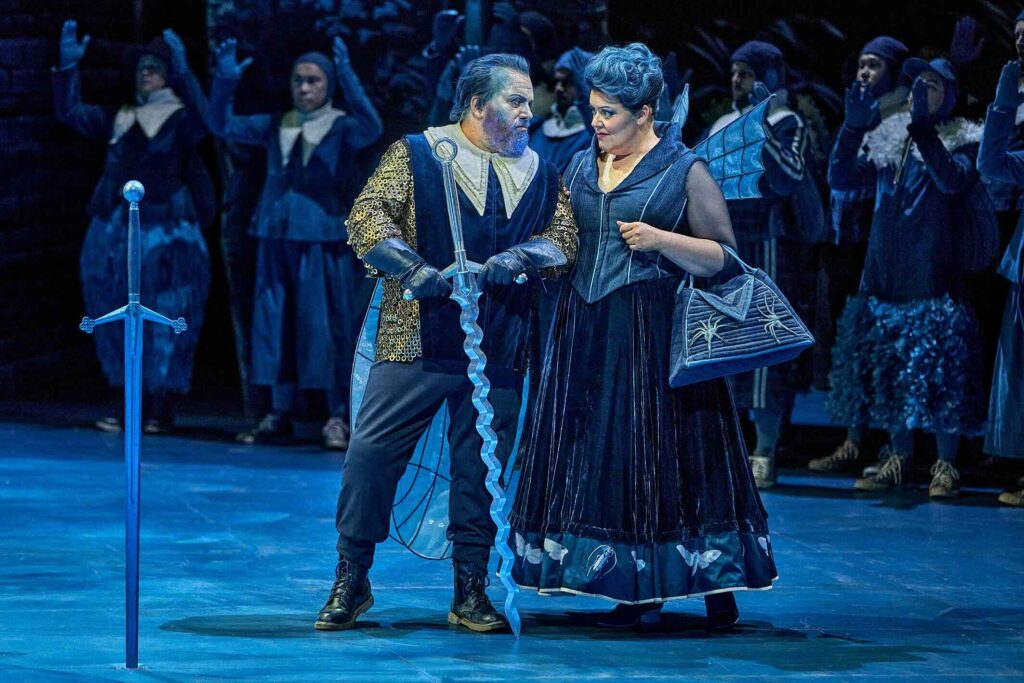
Olafur Sigurdarson (Friedrich von Telramund), Miina-Liisa Värelä (Ortrud), Chor der Bayreuther Festspiele.
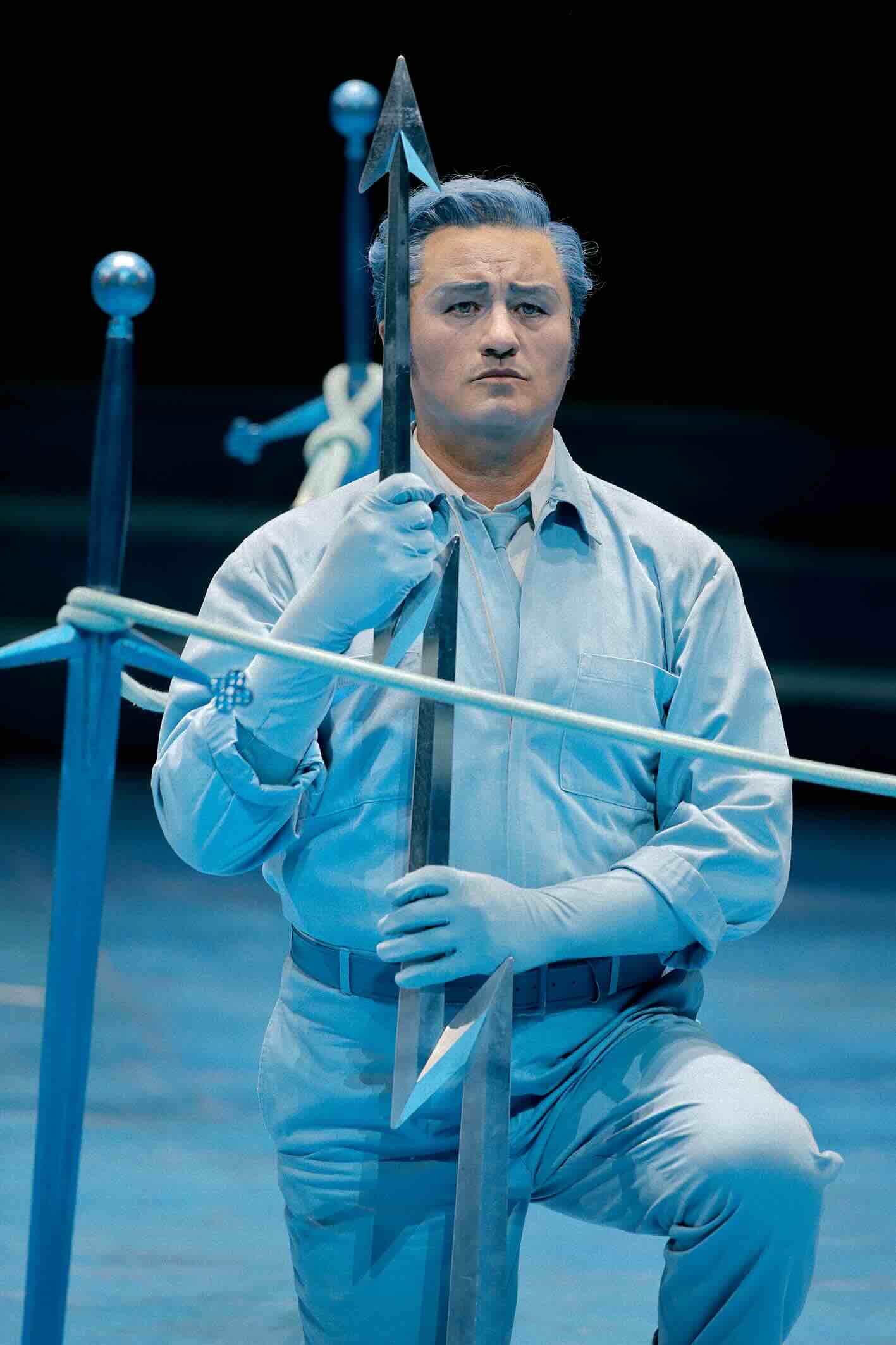
And the famous swan? Nowhere. Instead, a massive lightning storm courses through the insulators, and down comes a white spaceship. Lohengrin steps out in contemporary clothes and insulated gloves. Is the craft swan-shaped? Not obviously. More like a giant moth. And that’s no coincidence—Lohengrin soon sports moth wings, as do all the other inhabitants. It’s as if the people of Brabant are a colony of insects drawn helplessly to the buzz and glare of this endless power supply.
You can puzzle over the metaphor for as long as you like. You can even read the programme to see what the team thought it meant. But the point is, you shouldn’t have to. Opera staging has to speak for itself in the theatre, not require footnotes and a decoder ring. Here, the overload of buzzing, flickering imagery drowns the plot, the characters, and any emotional connection.
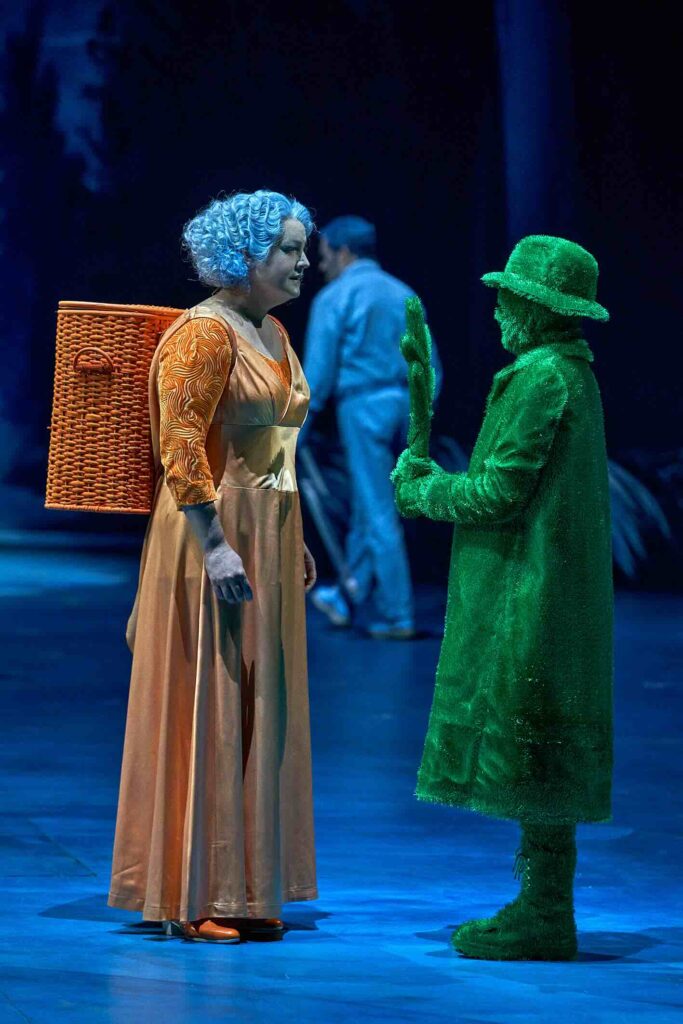
Elza van den Heever
Thank goodness, then, for the man in the pit. Christian Thielemann didn’t just save the evening—he turned it into a musical triumph of the first order. If Wagner is the god of Bayreuth, Thielemann is the archbishop, high priest, and chief evangelist rolled into one. His reading was nothing short of majestic. The precision of his pacing, the sheer architectural sweep of the score, and the way he drew an endless palette of colours from the Bayreuth Festival Orchestra were revelatory.
Thielemann doesn’t just conduct Lohengrin, he breathes it into life. The big climaxes were thrilling, yes, but it was the detail—the shaping of phrases, the glimmer of woodwind under a string phrase, the tension sustained across long, quiet passages—that made this performance incandescent. The balance between pit and stage was ideal, and the fabled Bayreuth acoustic responded to his every gesture.
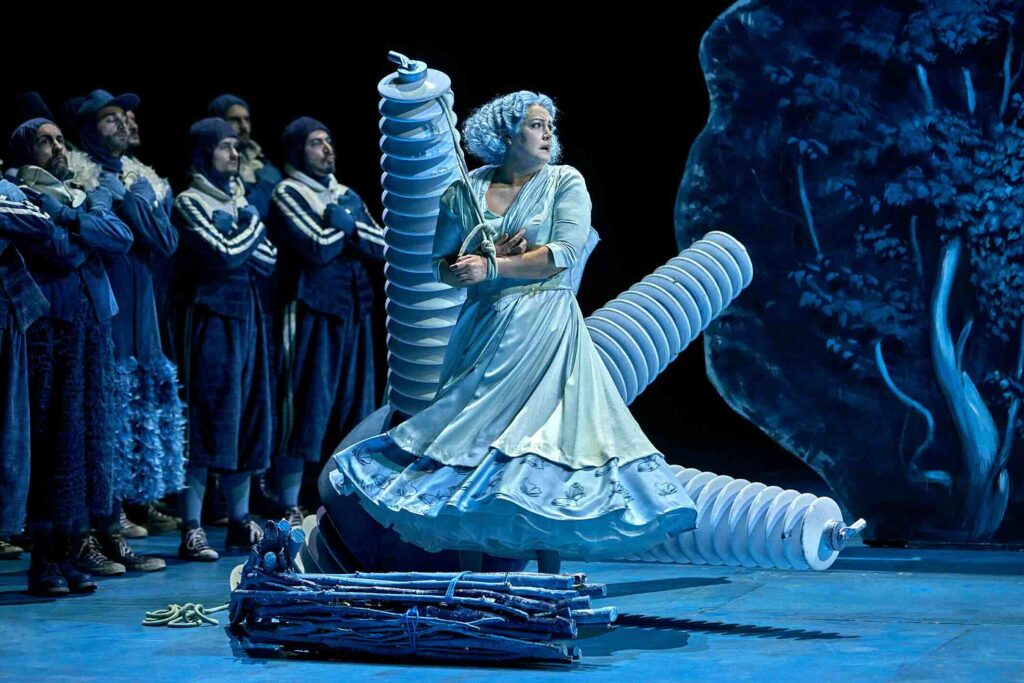
Elza van den Heever
Vocally, the cast met him at his level. Piotr Beczała’s Lohengrin had lyrical elegance and heroic gleam, his voice flowing effortlessly through Wagner’s long arcs. Elza van den Heever’s Elsa was bold and searching, every phrase alive with intention, her duets with Beczała some of the most rewarding moments of the night. Miina-Liisa Värelä gave Ortrud the sort of dark grandeur that makes the character so dangerous, while Ólafur Sigurdarson’s Telramund and Mika Kares’ King Heinrich brought weight and distinction.
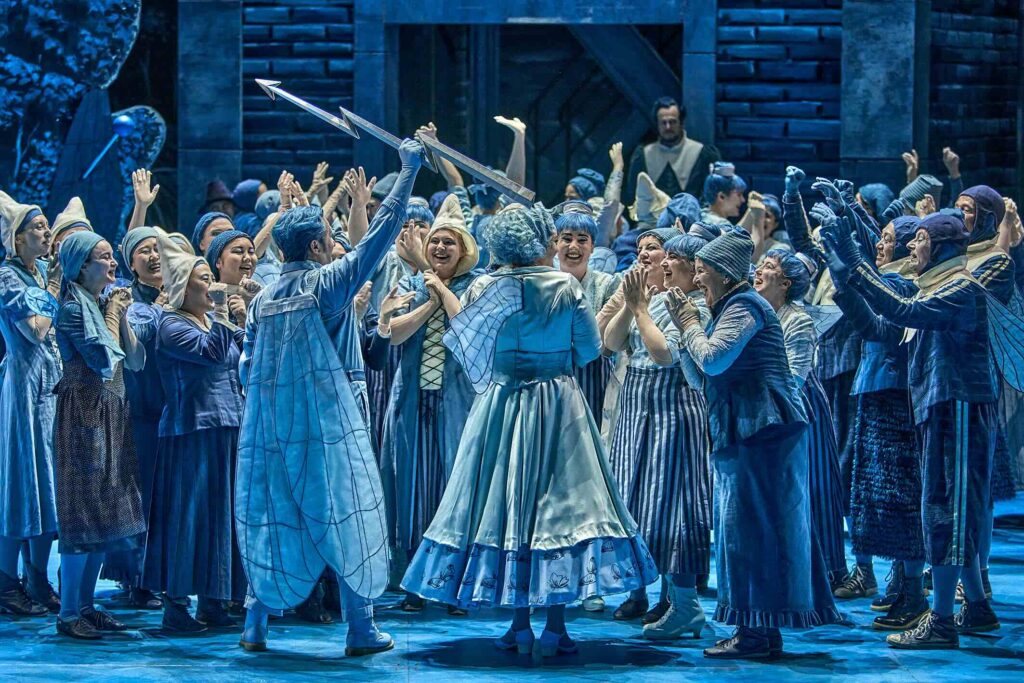
The chorus, prepared by Thomas Eitler de Lint, was its usual force of nature—powerful, precise, and dramatically committed. In a staging that left me cold, their collective sound was a reminder of Bayreuth’s enduring choral excellence.
So yes, the production was shocking—not just for its obsession with electricity, but for how utterly it failed to illuminate the opera’s heart. But musically? Under Thielemann, Lohengrin sparked with a steady, irresistible voltage.
Photo credit © Bayreuther Festpiele / Enrico Nawrath
Until August 22
https://www.bayreuther-festspiele.de/en/programm/auffuehrungen/die-meistersinger-von-nuernberg
Also, Bayreuth 2025:
Bayreuth 2024:
Bayreuth 2023:
